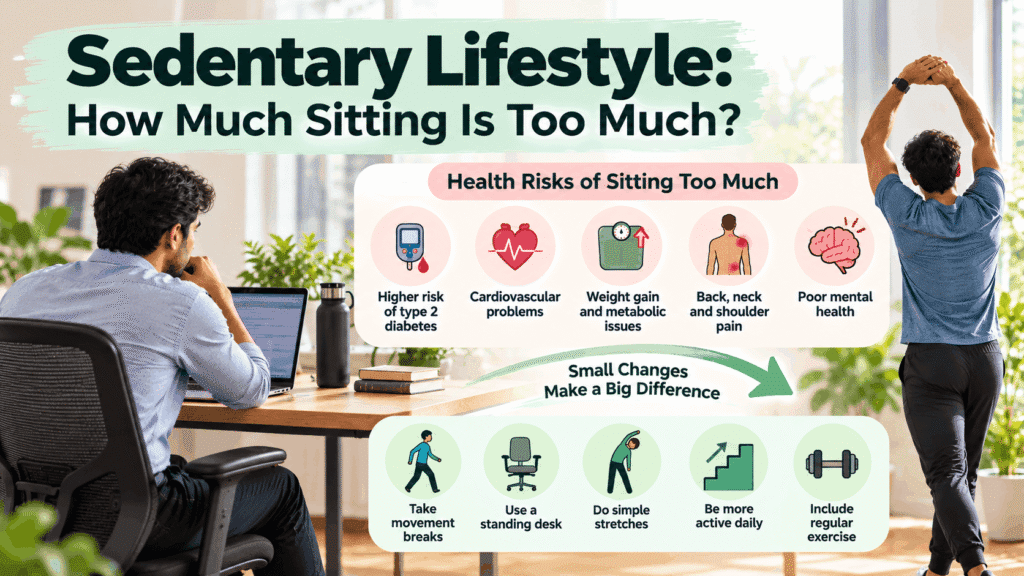
Quick Answer: Sitting for long periods can cause health issues. A sedentary lifestyle greatly increases the risks of getting type 2 diabetes and cardiovascular diseases, among many other health problems. However, there is no specific number of hours you can sit without physical activity to reduce risk.
Introduction
Have you ever sat at your desk and suddenly realized you have been sitting for hours? We are so accustomed to sitting during the work week, online classes, driving, and even social media.
Sitting down to work is fine, but sitting too long with little exercise can harm your health and leave you feeling stiff. You may feel tired and struggle to get up and move. A sedentary lifestyle can also cause chronic diseases.
The good news is that several easy options can limit sitting and encourage movement without requiring a gym. Learning about the dangers of sitting and finding easy ways to interrupt it can help us make lifestyle changes that improve our health without overhauling everything we do.
What Is a Sedentary Lifestyle?
A sedentary lifestyle is a way of life in which a person sits most of the time and rarely moves. This may include working at a desk, watching TV, taking online classes, playing video games or sitting for long car rides. Sedentary behavior is different from inactivity. Inactivity refers to a lack of physical activity, while a sedentary lifestyle involves sitting for long periods.
For example, you may go for a 30-minute walk each morning, but if you sit for eight hours at work, that inactivity can outweigh the health benefits of your morning exercise. That is why staying active takes more than one workout. Making time to move throughout the day matters just as much.
How Much Sitting Is Too Much?
No single number of hours determines whether your sitting time is unhealthy. Effects vary depending on your physical activity levels, overall health, daily routine, and how often you get up and move.
The World Health Organization (WHO) recommends reducing sitting time and replacing it with physical activity whenever possible. To reduce the risk of NCDs, adults need at least 150–300 minutes of moderate-intensity aerobic activity or 75–150 minutes of vigorous-intensity aerobic activity each week, along with muscle-strengthening exercises.
Is Sitting for 8 Hours a Day Harmful?
Sitting for eight hours does not automatically mean you will develop a health problem. However, if most of those hours pass without any movement, it may signal that you need to make your routine more active. Imagine an average office worker. They spend time sitting in a car commuting to and from work, sitting at a desk working, traveling home, then sitting to watch TV.
They may toss in some exercise here and there, but overall, they don’t move much throughout the day. Instead of worrying about a specific number of hours, focus on how long you sit without a break and how much physical activity you get throughout the week.
Does Exercising Once a Day Cancel Out Prolonged Sitting?
A daily workout routine is a great habit, but it doesn’t necessarily protect you from all the health risks long sitting hours pose. Working out increases muscle tissue, which in turn improves heart performance, lowers blood pressure, and improves glucose metabolism. Nevertheless, several hours of sedentary activity after the workout still pose significant risks to your health.
If you exercise in the morning, try to include a few movement breaks during your working hours, too. A short walk between meetings or some light stretching in the afternoon can help you avoid sitting continuously for too long.
What Are the Health Risks of Sitting Too Much?
Spending long periods sitting has been associated with several health problems. This doesn’t mean everyone who sits for long hours will develop these conditions, but reducing sedentary time is a useful step toward better long-term health.
Increased Risk of Type 2 Diabetes
Your muscles use glucose to produce energy, and physical activity helps your body manage blood sugar levels. When you spend most of your day sitting, your muscles have fewer opportunities to use glucose through movement.
Over time, high levels of sedentary behaviour, particularly when combined with insufficient exercise and other risk factors, are associated with a greater risk of developing type 2 diabetes. You don’t need an intense workout every time you take a break. Standing up, walking around your workspace, or taking a short walk after a meal can help you add more movement to your day.
Cardiovascular Problems
Regular physical activity benefits your heart. Walking, cycling, swimming, and other aerobic exercises help support cardiovascular fitness and overall heart health. On the other hand, spending much of your day sitting is associated with an increased risk of cardiovascular disease, especially when you do not get enough exercise.
Regular movement breaks and time for physical activity can help you build a healthier routine. If you already have heart disease or another medical condition, ask your healthcare professional which activities are appropriate for you.
Weight Gain and Metabolic Health
When you sit for long periods, your body uses less energy than when you walk or bike. If you constantly consume more energy than you burn, that will inevitably lead to weight gain.
A sedentary routine can also go hand in hand with habits such as frequent snacking, irregular sleep, and limited exercise, which may affect metabolic health. However, weight gain is influenced by several factors, including diet, genetics, medication, sleep, and certain medical conditions. Sitting is only one part of the picture.
Back, Neck, and Shoulder Discomfort
Have you ever had a stiff neck or lower back pain while sitting in front of a laptop? Sitting in one position for too long can harm your health.
Bending over your computer, looking down at your phone, or sitting at a computer for too long with bad posture can hurt your neck, shoulders, and lower back.
Try bending your knees, sitting at a desk at the right height, taking frequent breaks, and stretching. If none of these things work, consult a medical professional.
Poor Circulation and Leg Discomfort
When you sit for a long time, your legs don’t move much. Some people may experience stiffness or discomfort after sitting for long periods, especially on a long journey.
Making minor movements, such as ankle stretches, posture changes, and regular walking, can help you avoid staying still for long. However, sudden swelling in one leg, which may also be painful, warm, and reddish, should be checked urgently by a medical professional, as it could be a blood clot.
Mental Well-Being and Energy Levels
A full day sitting indoors can leave you tired, restless, or mentally drained. A short walk or a break from your desk can refresh you.
Regular physical activity may also support better sleep, improve mood, and help manage stress. Movement is not a replacement for mental health treatment when it is needed, but it can be a helpful part of looking after your overall well-being.
Who Is Most at Risk from a Sedentary Lifestyle?
A busy lifestyle can be detrimental to individuals regardless of their profession; however, some of us are more likely to lead a sedentary lifestyle due to our day-to-day activities. For instance, people in corporate jobs can stay glued to their desks for extended periods, making it difficult to get enough exercise each day.
Students can also find it challenging to stay active since they are always studying online or sitting in class taking part in various academic activities. People working from home may also struggle to disconnect from work, especially if their workspace is in their home.
Drivers, call-centre employees, gamers, and people who spend several hours watching television may also have limited opportunities to move. Some people with mobility limitations or chronic health conditions may also need to spend more time sitting. In such cases, physical activity should be adapted to their individual needs and abilities.
The first step is to recognise when sitting has become a major part of your day. Once you identify those periods, it becomes easier to find practical ways to include more movement.
What Is the Exercise-Snack Concept?
You have probably heard of grabbing a quick snack when you are hungry. An exercise snack works the same way, but it gives your body a short burst of movement instead of food. Exercise snacks are brief periods of physical activity spread throughout the day. They might include brisk walking for a few minutes, climbing stairs, doing a few chair squats, or simple exercises between work tasks.
The best part is that you do not need a gym membership or special equipment. You can choose activities that fit your schedule, available space, and fitness level. Research on short bouts of activity suggests that exercise snacks may be a practical way to improve physical fitness. Their effects depend on the activity, intensity, frequency, and individual health factors. They should complement, rather than automatically replace, recommended weekly physical activity.
How Do Exercise Snacks Help?
Exercise snacks give you opportunities to move throughout the day instead of sitting for hours at a stretch. For example, a short walk after lunch may help your body manage the rise in blood glucose after eating. Standing up, stretching gently, or walking around your office may also help relieve stiffness from sitting in one position.
This approach could benefit anyone who has a hard time finding time for a lengthy workout. Instead, you can use smaller windows in your schedule to do physical activity that keeps you healthy. It encourages people to make working out part of their daily life instead of something they only do when they have extra time.
Examples of Simple Exercise Snacks
- There are many ways to fit in brief physical activity. You could go for a walk, take the stairs, do wall push-ups or stretch your shoulders. If you work from home, you can stretch or do simple exercises during a call or when you get back to your desk.
- If you haven’t been exercising regularly, start slow and move on to more intense workouts as your fitness level improves. You can also do a few simple stretches if you have had a long day of sitting. If you have issues with balance or joint problems, you may need to do physical therapy exercises or get advice from a medical professional.
- You do not need to make every break intense. Even simple movements can help you build a more active routine.
A Desk-Worker Micro-Break Routine
If your job involves sitting at a computer most of the day, taking regular breaks can be challenging. You might get so focused on a task that you forget to move until your back starts to stiffen.
A desk-worker micro-break routine can help you build movement into your workday. These breaks do not have to be long or complicated. Start with a few minutes of standing, stretching, or walking between tasks.
Here is a simple routine you can adjust to your schedule.
| Time or work cue | Suggested activity | Purpose |
| After starting work | Stand up, adjust your posture, and walk briefly | Start the day with movement |
| Every 30–60 minutes, when practical | Take a short standing or walking break | Interrupt prolonged sitting |
| Between online meetings | Do gentle shoulder rolls and comfortable neck movements | Help reduce stiffness |
| During a phone call | Stand or walk if appropriate | Add movement to your routine |
| After lunch | Take a comfortable 5–10-minute walk | Break up sitting after a meal |
| Before finishing work | Walk briefly and stretch comfortably | End the workday with movement |
These intervals are suggestions, not strict medical rules. Adjust them based on your workload, comfort, and workplace requirements.
How to Make Micro-Breaks a Daily Habit
The best way to remind yourself to take breaks is to associate them with other activities. For instance, you could get up and stretch every time you finish a report, walk around during phone conversations if the conversation allows, or stretch before starting a new task. If you get so involved in your work that you forget basic needs like food and bathroom breaks, set a reminder on your computer or phone.
You do not have to interrupt an important task every few minutes. Begin with a schedule that feels realistic and make changes as needed. Over time, these small breaks can become a natural part of your working day.
Simple Ways to Reduce Sitting Time at Work and Home
You don’t need dramatic changes to become more active. A few everyday adjustments can help you spend less time sitting.
Make Your Workspace More Movement-Friendly
Arrange your desk and chair so that you can work comfortably and change positions when needed. Keep your monitor at a comfortable viewing height, and make sure your chair supports you well.
If you have a sit-stand desk, alternate between sitting and standing instead of staying in one position all day. Continuous standing isn’t the goal; regular movement and posture changes are more useful.
You can also use small opportunities to move, such as getting up to refill your water bottle or collecting documents from another part of the office.
Replace Some Sitting Activities with Movement
Look for everyday activities you can do with a little more movement. When practical, walk short distances, take the stairs if you are comfortable, or stretch while you wait for a task to finish.
At home, you could walk around the house, do chores, take an evening walk instead of watching TV, or just have fun on the couch. All of these things may help you reduce the time you spend sitting without any physical activity.
Combine Movement with Your Existing Routine
Make building a new habit easier by linking it to an existing one. Do you go for walks in the morning? Then try walking again after lunch. Do you study for several hours? Stand up and stretch during your study breaks. Do you spend hours on the phone? Take a walk when it suits you.
Walking to nearby shops, gardening, and cleaning can also provide opportunities to move. You do not need to turn every activity into exercise. Simply look for ways to avoid sitting for most of your waking hours.
How Much Physical Activity Do Adults Need?
Reducing sitting time matters, but you should also pay attention to how much exercise you get each week.
The World Health Organization recommends the following general targets for adults.
| Type of activity | Weekly recommendation |
| Moderate-intensity aerobic activity | 150–300 minutes |
| Vigorous-intensity aerobic activity | 75–150 minutes |
| Muscle-strengthening activities | At least 2 days |
Moderate-intensity activities include brisk walking and cycling at a pace that makes you breathe a little faster while still allowing you to talk. Vigorous activities make breathing noticeably harder. You can spread your activity across the week rather than completing it all in one session. For example, walking briskly for 30 minutes on five days adds up to 150 minutes.
If you aren’t active, slowly start exercising for a few minutes at a time. Pick something that’s good for your body and what you are capable of doing. You can always do more later; don’t try to do too much at once. Try some form of exercise, and remember it’s better to exercise than not.
Does Standing More Help Reduce the Risks of Sitting?
Standing instead of sitting can reduce sedentary time, but standing still isn’t the same as exercising.
If you work at a desk, try alternating between sitting, standing, and walking throughout the day. Choose positions that feel comfortable, and avoid staying still for long periods, whether sitting or standing.
A sit-stand desk might help you to move, but you don’t need one to be active. Getting up from your desk to walk away or take frequent breaks is a much more efficient option. The aim is to move more often, not simply to spend the entire day on your feet.
Can You Be Active and Still Have a Sedentary Lifestyle?
Yes. You can exercise regularly and still spend much of your day sitting.
For example, someone might go to the gym every morning and then spend eight hours working at a computer, followed by several hours watching television. Their workout is beneficial, but their overall routine may still involve a lot of sedentary time.
But that doesn’t mean that exercise is useless. Working out at least a little bit benefits the heart, muscles, and overall metabolism. However, this is a more practical way to incorporate movement into your daily schedule than spending an hour at the gym to make up for sitting for eight.
Think of your workout as one part of a healthy lifestyle. The other part is finding simple opportunities to move between workouts.
When Should You Speak to a Healthcare Professional?
If you regularly experience back or neck pain, persistent joint discomfort, or unusual breathlessness during physical activity, consider speaking with a healthcare professional. People with diabetes, cardiovascular disease, significant mobility limitations, or other chronic health conditions may benefit from an activity plan tailored to their needs.
Do not ignore unexpected chest pains, sudden appearance of severe breathlessness or fainting. Sudden pain and swelling in one leg should also not be ignored, as these are symptoms requiring immediate medical attention. A competent doctor can help you calculate your risks, choose exercises that suit your health, and recommend any necessary tests.
A Practical Approach to Breaking Up Sitting Time
You don’t need to change every aspect of your lifestyle at once. You only need to notice where you spend most of your time sitting right now. This could be when you walk to work, at your job, while studying online, or even during evening activities. Choose a lifestyle change that is easy to apply in your life. Maybe you can walk more often or stand up during meals.
Once these habits become part of your routine, you can gradually add more walking, aerobic exercise, and strength training. Do not feel discouraged if you miss a break on a busy day. Simply return to your routine when you get another opportunity.
The goal is to build habits that fit your life and that you can continue over time.
A Simple Daily Movement Checklist
If you want to reduce your sitting time, start with these simple habits:
- Break up sitting: Rather than sitting for long periods, get up and move around.
- Take breaks: When you’re standing or sitting for long periods, stand up and stretch periodically.
- Try exercising: Make sure you squeeze in physical activity whenever possible.
- Incorporate walking: Try to walk more, and take walks regularly.
- Build your muscles: Do some form of muscle-building exercise at least two days a week.
- Aim to meet the physical activity guidelines: Work out towards meeting these standards. This will help you ensure that you’re getting the recommended level of activity.
- Listen to your body: If something isn’t working or it hurts, stop and find another exercise you can do instead.
- Be consistent: Find what works for you and stick to it.
Don’t always strive to hit the absolute maximum physical activity levels. Find a balance that works for you and that you can stick to.
Frequently Asked Questions
1. How many hours of sitting per day are considered unhealthy?
No official recommended limit for sitting time is safe for everyone. Sitting most of the day with few breaks can increase your risk of many health problems. To lower your risk, limit how long you sit and try to get regular physical activity.
2. Is walking for five minutes enough to break up sitting time?
A five-minute walk is a great way to break up long sitting sessions and add much-needed movement to your day. The time you spend walking, and how often you do it, will determine the benefits you get. Walking breaks are a great addition to exercise, but they shouldn’t replace it entirely.
3. What are the best exercise snacks for office workers?
The following are some examples of exercises that can be used in a daily home workout: brisk walking, comfortable stair climbing, wall push-ups, chair squats, and simple stretching exercises. Choose activities that best suit your fitness level and location. Go gently, and gradually build up your activity level.
4. Can sitting too much cause type 2 diabetes?
Long periods of sitting around are linked to becoming diabetic in specific ways. Still, it usually means that a person has little physical activity and other factors that may lead to the disease. Sitting for long periods does not necessarily mean a person will develop diabetes. Physical activity, diet, and screening all help prevent the disease.
5. Is standing better than sitting all day?
Standing can reduce sitting time, but standing continuously isn’t ideal either. Alternating between sitting, standing, and walking is a practical approach. Regular movement and suitable physical activity remain important for overall health.
Conclusion
A sedentary lifestyle can become part of your daily routine without you even realising it. Hours spent working, studying, travelling, or watching television can add up quickly, especially when you don’t get enough physical activity.
Although no exact number of sitting hours determines your health, reducing prolonged sitting and moving more often are worthwhile goals. Short walks, exercise snacks, desk-worker micro-breaks, and regular workouts can all help you develop a more active routine.
You do not have to wait until you have enough time for a full workout. Stand up, stretch, walk around, or choose another comfortable movement whenever you can.
Small changes, repeated consistently, can help you spend less time sitting and make movement a natural part of your everyday life.
References
- https://www.who.int/publications/i/item/9789240015128
- https://pubmed.ncbi.nlm.nih.gov/38190022/
- https://pubmed.ncbi.nlm.nih.gov/41464286/
- https://www.who.int/publications/i/item/9789240014886
- https://pubmed.ncbi.nlm.nih.gov/41057224/