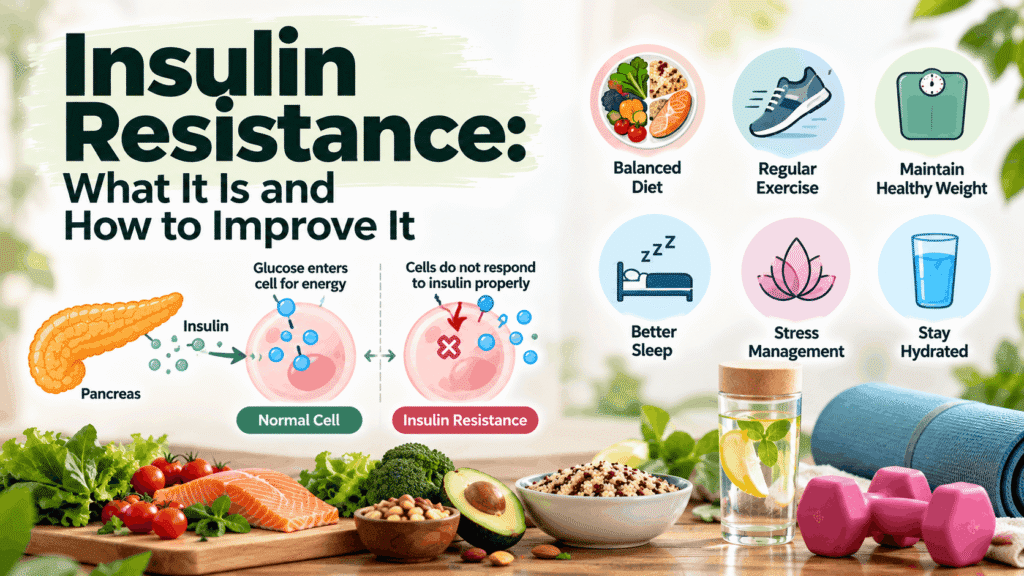
Quick Answer: Insulin resistance happens when your body’s cells stop responding to insulin as well as they should. This makes it harder for glucose to move from your blood into your cells, and it can happen without any obvious symptoms.
Introduction
Have you ever had a blood test come back with slightly higher blood sugar and wondered what might be going on? Or maybe you have heard the term insulin resistance but were never quite sure what it meant.
Insulin resistance is a common metabolic issue that can develop gradually. It is linked with conditions such as prediabetes, type 2 diabetes, PCOS, and other metabolic health problems. The tricky part is that you may not feel anything unusual in the early stages.
That is why it helps to understand what is happening inside your body. Instead of waiting for your blood sugar to become a bigger concern, a few practical changes early can support your long-term metabolic health.
What Is Insulin Resistance?
Insulin is a hormone made by your pancreas. One of its main jobs is to help glucose move from your bloodstream into your cells, where it can be used as energy.
After you eat, carbohydrates are broken down into glucose and your blood sugar rises. Your pancreas then releases insulin, which signals your cells to take in that glucose.
With insulin resistance, your cells do not respond to insulin as well as they should. Your pancreas may try to compensate by producing more insulin, which can keep blood sugar normal for a while. Over time, however, this system can become less effective.
Why Does Insulin Resistance Happen?
No single factor causes insulin resistance. Your genes, family history, activity levels, sleep, body fat distribution, diet, age, and certain hormonal conditions can all play a role.
Excess Abdominal Fat
More abdominal fat is associated with a higher risk of insulin resistance. But this does not mean insulin resistance happens only to people who are overweight.
People at different body weights can have insulin resistance. Looking at your overall metabolic health is therefore much more useful than judging your risk based only on your appearance.
Physical Inactivity
Your muscles play an important role in handling glucose. Every time you move, your muscles use glucose for energy, which can help your body respond to insulin more effectively.
If most of your day is spent sitting and you get very little physical activity, your insulin sensitivity may be affected. Even adding small amounts of movement to your day can be a good place to begin.
Genetics and Family History
In addition, a person’s risk is significantly increased if there is a history of type 2 diabetes among family members, since genetic factors can also contribute to the development of the disease.
Having a family history does not mean that you will definitely develop diabetes. It simply gives you another reason to pay attention to your blood sugar and overall lifestyle.
Hormonal Conditions
Some hormonal conditions are closely linked with insulin resistance. Polycystic ovary syndrome (PCOS) is one example, as insulin resistance is commonly seen in people with PCOS.
However, insulin resistance is not required for a diagnosis of PCOS. The relationship between the two can also vary from one person to another.
Poor Sleep and Ongoing Stress
Sleep and stress may not be the first things that come to mind when you think about blood sugar, but they can still matter. Poor sleep can affect appetite, energy, hormones, and glucose regulation.
Similarly, stress can contribute to poor eating and exercise habits and insufficient sleep. These factors can contribute to insulin resistance, though they are not the only ones.
What Are the Symptoms of Insulin Resistance?
One frustrating thing about insulin resistance is that it often doesn’t cause noticeable symptoms. You may have it for quite some time without feeling any different.
That is why simply searching for insulin resistance symptoms isn’t enough to know whether you have the condition. Some people may have increased abdominal fat, high blood pressure, abnormal cholesterol levels, or darker, thicker skin around the neck or underarms.
However, these signs can also have other causes. If you are concerned about insulin resistance, proper medical evaluation and blood tests are much more useful than trying to diagnose yourself based on symptoms.
How Is Insulin Resistance Diagnosed?
No single routine test can tell everyone whether they have insulin resistance. Instead, a healthcare professional usually looks at the bigger picture, including your medical history, family history, blood pressure, blood glucose, cholesterol, and other risk factors.
Such tests as fasting blood glucose, HbA1c, and oral glucose tolerance test (OGTT) can be used to evaluate carbohydrate metabolism. The specific test to be taken is determined by the doctor depending on the situation.
HOMA-IR Explained
If you have been reading about insulin resistance, you may have come across HOMA-IR. It stands for Homeostatic Model Assessment of Insulin Resistance and uses fasting glucose and fasting insulin levels to estimate insulin resistance.
A commonly used formula is HOMA-IR = fasting insulin × fasting glucose ÷ 405 when glucose is measured in mg/dL. When glucose is measured in mmol/L, the commonly used formula is HOMA-IR = fasting insulin × fasting glucose ÷ 22.5.
Is HOMA-IR a Diagnostic Test?
Not exactly. HOMA-IR can be useful in research and may provide additional information in some clinical situations, but no single cutoff can reliably diagnose insulin resistance in everyone.
Because various factors, such as the study population, laboratory methods, and fasting, can affect results, they may vary significantly. As a result, it should be interpreted with a qualified professional rather than attempting to decipher the value on your own if you get a HOMA-IR examination.
Insulin Resistance vs Prediabetes
The terms insulin resistance and prediabetes are often used together, but they do not mean the same thing. Insulin resistance describes how well your body’s cells respond to insulin. At the same time, prediabetes refers to blood glucose levels that are higher than normal but not yet high enough to be classified as diabetes.
You can have insulin resistance while your blood sugar is still within the normal range because your pancreas may be producing enough insulin to compensate. If this continues over time, blood glucose may eventually start to rise.
Insulin Resistance and Prediabetes at a Glance
| Feature | Insulin Resistance | Prediabetes |
| What does it mean? | Cells do not respond to insulin as effectively | Blood glucose is higher than normal but below the diabetes range |
| Obvious symptoms? | Usually none | Usually none |
| Main concern | Can contribute to abnormal glucose regulation | Increases the risk of type 2 diabetes |
| How is it assessed? | Overall metabolic picture; HOMA-IR may be used in selected settings | HbA1c, fasting glucose, or OGTT |
| Can lifestyle changes help? | Yes | Yes |
Can Insulin Resistance Be Improved?
Yes. Improving insulin sensitivity is not about finding one miracle food or following an extremely restrictive diet. It usually comes down to several small changes working together.
Regular physical activity, strength training, a balanced diet, enough fibre, good sleep, and stress management can all support better metabolic health. The best approach fits into your everyday life.
Stay Physically Active
You do not need to spend hours at the gym to get more active. Walking, bicycling, swimming, dancing, jogging, or even just moving around the house can help your body burn glucose.
If you find yourself sitting for long periods, break it up with some exercise. Go for a walk after meals, or take the stairs instead of the elevator if you can.
Do Not Ignore Strength Training
Strength training is highly efficient because muscles directly consume glucose, and muscle building is positively correlated with lower blood sugar levels and improved insulin response.
I suggest you start with the usual exercises: squats, lunges, glute bridges, wall push-ups, resistance bands and dumbbells. You do not have to choose the heaviest weight. It is better to do sports regularly.
Add More Fibre to Your Diet
Fibre can help with blood glucose control because it slows digestion and the absorption of carbohydrates. Vegetables, fruits, oats, whole grains, beans, lentils, chickpeas, nuts, and seeds are all useful sources.
You also do not need to give up carbohydrates completely. Instead, choose higher-fibre options and pair them with protein and vegetables to make your meals more balanced.
Simple Ways to Add More Fibre
| Instead of | Try More Often |
| Biscuits as a regular snack | Fruit with nuts or seeds |
| Refined breakfast cereal | Oats with fruit and nuts |
| White bread alone | Whole-grain bread with eggs or vegetables |
| Refined carbohydrates on their own | A balanced meal with vegetables and protein |
| Sugary snacks | Fruit, roasted chickpeas, or unsweetened yoghurt |
Build Balanced Meals
Eating for better metabolic health does not have to mean following a complicated diet chart. A simple meal can include a protein source, vegetables, fibre-rich carbohydrates, and some healthy fats.
For example, an Indian meal could include dal, vegetables, curd, and a sensible portion of rice or roti. Foods such as rice, potatoes, and roti don’t automatically need to be removed from your diet just because you have insulin resistance.
Choose Protein-Rich Foods
Protein is important because it makes meals more satisfying and helps maintain a healthy, balanced diet. Protein sources include eggs, fish, chicken, curd, paneer, tofu, soy, dal, beans, chickpeas, etc., depending on what you consume.
You don’t need to rely on one protein source. Having a variety of protein-rich foods throughout the week can make your meals more enjoyable and easier to maintain.
Cut Back on Sugary Drinks
Sugary drinks are easy to overlook because they do not always make you feel as full as solid food. Soft drinks, sweetened juices, energy drinks, and heavily sweetened tea or coffee can all add a significant amount of sugar to your daily intake.
You do not have to stop everything suddenly. For example, if you regularly add sugar to your tea or coffee, gradually reducing the amount can be an easier habit to maintain.
Get Enough Sleep
Sleep may not seem directly connected to blood sugar, but it supports overall metabolic health. Poor sleep can affect your appetite, energy, mood, and glucose regulation.
Try to keep your sleep schedule as regular as possible, and allow yourself enough time to rest. If you constantly snore, gasp for air at night, or feel exhausted throughout the day, it may be a good idea to see a doctor.
Find Practical Ways to Manage Stress
Stress is a normal part of life, so eliminating it isn’t realistic. Instead, finding simple ways to manage stress can help you take better care of yourself.
A walk, a few minutes of deep breathing, yoga, meditation, reading, journaling, or spending time with people you enjoy can all help. You don’t need a complicated routine; even something small you can do regularly can help.
Does Weight Loss Improve Insulin Resistance?
For people who are overweight or obese, losing even a modest amount of weight can improve insulin sensitivity and reduce the risk of developing type 2 diabetes. However, weight should not be the only thing you look at when judging your metabolic health.
Becoming more active, getting stronger, eating more fibre, sleeping better, and improving blood glucose are all meaningful forms of progress. The goal is to support your health rather than simply chase a number on the weighing scale.
Can You Have Insulin Resistance at a Normal Weight?
Yes. Insulin resistance can occur in people of different body sizes, so being thin or having a normal BMI doesn’t automatically mean your insulin sensitivity is perfect.
Family history, genetics, inactivity, higher visceral fat accumulation, PCOS, sleep problems, and other factors can contribute to metabolic irregularities. Those who suspect that they may have developed predispositions to diabetes based on such conditions should contact their doctor and submit to tests.
What Happens If Insulin Resistance Continues?
Insulin resistance does not mean that you will definitely develop diabetes. However, if it continues for a long time, it can contribute to rising blood glucose and increase the risk of prediabetes and type 2 diabetes.
It can also occur alongside other metabolic problems such as high blood pressure, abnormal cholesterol levels, fatty liver disease, and increased cardiovascular risk. Finding these risks early gives you more time to address them.
When Should You Get Checked?
It may be a good idea to speak with a healthcare professional if you have a strong family history of type 2 diabetes, PCOS, previous gestational diabetes, high blood pressure, abnormal cholesterol, increased abdominal fat, or a previous diagnosis of prediabetes.
You may not necessarily need an insulin test. Depending on your situation, your healthcare professional may recommend tests such as fasting glucose, HbA1c, an OGTT, or a lipid profile to understand your overall metabolic health.
A Practical Approach to Improving Insulin Sensitivity
You don’t need to change your routine overnight. Start by looking at the areas where you feel you can make a realistic change and build from there.
If you sit most of the day, start taking short walks. If you don’t exercise at all, start with simple strength-building exercises. If your diet is low in fiber, start eating more vegetables, fruits, pulses, whole grains, nuts, and seeds.
There is no single “perfect” routine for insulin resistance. What matters is finding habits that fit your lifestyle and that you can continue even when life gets busy.
A Simple Insulin Resistance Health Checklist
If you are trying to improve your metabolic health, a few simple habits can make a good starting point:
- Stay active. Find ways to move regularly throughout the day.
- Build strength. Include resistance exercises in your weekly routine.
- Eat more fibre. Add vegetables, fruits, pulses, whole grains, nuts, and seeds.
- Include protein. Add a protein source to your main meals.
- Limit sugary drinks. Choose water or unsweetened drinks more often.
- Prioritise sleep. Give your body enough time to rest and recover.
- Manage stress. Find something simple that helps you unwind.
- Keep track of your health. Follow your healthcare professional’s recommendations for blood glucose, blood pressure, and cholesterol checks.
You do not have to get everything right from day one. Choose one or two changes that feel manageable and build on them gradually.
Frequently Asked Questions
1. What are the common symptoms of insulin resistance?
Insulin resistance often occurs without symptoms. As a result, it can go unnoticed and undiagnosed. Some associated symptoms include upper-body obesity, high blood pressure, abnormal cholesterol levels, or darkened skin patches. Still, none of these are diagnostic on their own.
2. Can insulin resistance be reversed?
Insulin sensitivity can often be improved through regular physical activity, strength training, a balanced diet, adequate fibre, good sleep, and other healthy lifestyle habits. The best changes depend on your individual health and risk factors.
3. Is HOMA-IR enough to diagnose insulin resistance?
No. The insulin resistance estimate from the HOMA-IR method isn’t diagnostic. There’s no definitive cut-off value for anyone. Your doctor will interpret your HOMA-IR results in context with your other bloodwork and medical history.
4. Is strength training good for insulin resistance?
Yes. Strength training can help your muscles use glucose more effectively and may improve insulin sensitivity. You can combine it with activities such as walking, cycling, swimming, or other aerobic exercise for a more balanced fitness routine.
5. Do I need to stop eating carbohydrates if I have insulin resistance?
No, you shouldn’t remove carbohydrates from your diet. Limit highly processed foods, eat fibrous carbs, eat in portions, and include protein, vegetables, and healthy fats.
Conclusion
Insulin resistance can develop silently, so you may not notice symptoms until your glucose test shows abnormal results. The key is to make gradual lifestyle changes, such as exercising regularly, strength training, eating more fiber-rich foods, getting adequate sleep, and reducing stress.
You do not have to make dramatic or unsustainable changes to your diet and lifestyle to see a difference. Choose a few things to start with and then gradually incorporate more healthy habits. If you believe you are at risk of developing diabetes or have concerns about your metabolic health, it is best to speak with your healthcare provider and get proper screening and recommendations that suit your situation.
References
- https://www.niddk.nih.gov/health-information/diabetes/overview/what-is-diabetes/prediabetes-insulin-resistance
- https://diabetesjournals.org/care/issue/49/Supplement_1
- https://www.cdc.gov/diabetes/prevention-type-2/prediabetes-prevent-type-2-diabetes.html
- https://pubmed.ncbi.nlm.nih.gov/37331899/
- https://pubmed.ncbi.nlm.nih.gov/22910133/
- https://pubmed.ncbi.nlm.nih.gov/40051945/