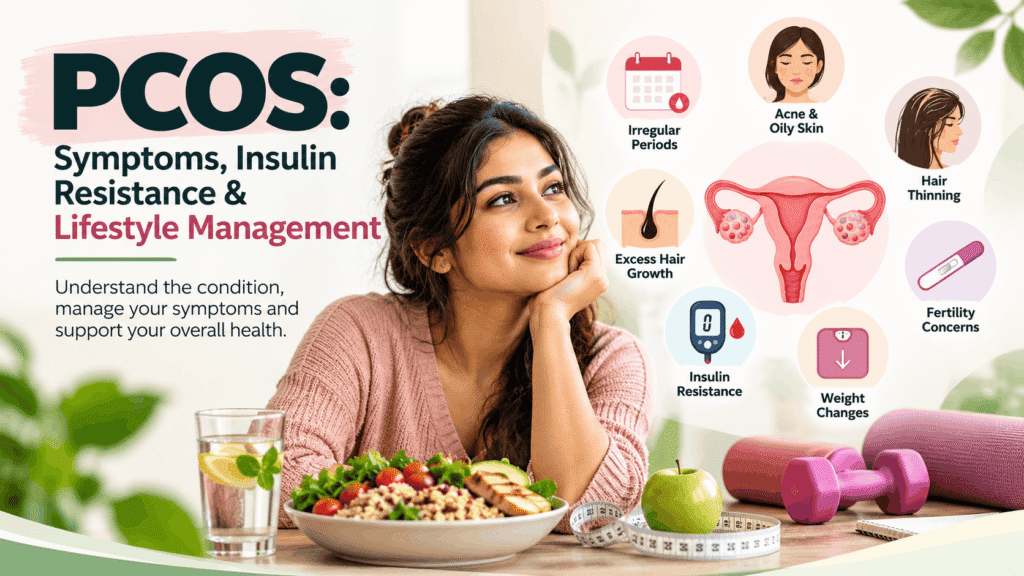
Quick Answer: PCOS is a common hormonal disorder which can affect periods, ovulation, skin, hair, metabolism, and fertility; it can occur at any body weight, and therefore controlling PCOS is not just a matter of losing weight but involves treating your symptoms, supporting your general health and dealing with your fertility goals.
Introduction
Have your periods suddenly become irregular? Maybe you have started noticing more acne, unwanted facial hair, or thinning hair on your scalp. If these changes sound familiar, you may be wondering whether PCOS could be the cause. Polycystic ovary syndrome (PCOS) is a common hormonal condition that affects women of reproductive age. But it does not look the same in everyone.
For one woman, irregular periods may be the biggest concern. Someone else may struggle mainly with acne or unwanted hair growth. Another woman may discover she has PCOS while trying to become pregnant. Weight is another area where there is a lot of misunderstanding. Some women with PCOS have a higher body weight, while others do not. You can have PCOS at any body size.
That is why PCOS treatment should not revolve around the weighing scale alone. A better approach looks at the whole picture, including your periods, hormones, blood sugar, lifestyle, mental wellbeing, and reproductive goals.
What Is PCOS?
Polycystic ovary syndrome is a hormonal condition that can affect ovulation and the way the ovaries function. It is commonly associated with irregular ovulation and increased androgen activity. Some women may also have a particular appearance of their ovaries on an ultrasound.
The name itself can be confusing. Having PCOS does not mean that you necessarily have ovarian cysts. The small structures seen on an ultrasound are usually follicles, not true cysts. Doctors diagnose PCOS by reviewing your symptoms, menstrual history, exam findings, blood tests, and sometimes an ultrasound.
Why Is PCOS More Than an Ovarian Problem?
Although the ovaries are part of PCOS, the condition can affect several areas of health.
It may be associated with:
- Irregular or unpredictable periods
- Difficulty with ovulation
- Increased androgen activity
- Excess facial or body hair
- Acne or oily skin
- Scalp hair thinning
- Insulin resistance
- Increased risk of prediabetes and type 2 diabetes
- Cardiovascular risk factors
- Difficulty becoming pregnant
- Anxiety, depression, or concerns about body image
You do not have to experience all of these symptoms to have PCOS.
What Are the Common Symptoms of PCOS?
PCOS symptoms can differ from one woman to another. Sometimes the changes are obvious, while other times they are subtle and develop gradually.
Irregular Periods
For many women, changes in their menstrual cycle are the first clue that something may be wrong.
You may notice that your periods:
- Come less often than expected
- Have long gaps between them
- Are unpredictable
- Occur only a few times a year
- Become unusually heavy after a long gap
But an irregular period does not automatically mean PCOS.
Stress, thyroid problems, major weight changes, certain medications, and other hormonal conditions can also affect your menstrual cycle. That is why it is important to find the actual cause rather than assuming it is PCOS.
Excess Facial or Body Hair
Thicker or darker hair may be noticed on the chin, upper lip, chest, stomach, or back by some women who have PCOS. This condition, known as hirsutism, occurs when androgen activity is higher than normal.
The degree of hair growth can vary widely from person to person. Genetic factors are also involved, so unwanted facial hair alone does not prove someone has PCOS.
Acne and Oily Skin
Hormonal changes may increase sebum production and cause acne. Women who have PCOS may still get acne after their teenage years, especially on the chin, along the jawline or on the lower part of the face.
However, acne is common and can have many causes. It should therefore be considered alongside other symptoms rather than used as a standalone sign of PCOS.
Scalp Hair Thinning
PCOS can also affect scalp hair. You may notice your hair feels thinner, your part looks wider, or you have less hair around the crown of your head. But hair loss is not always caused by PCOS. Stress, thyroid disorders, nutritional deficiencies, genetics, medications, and other health conditions can also contribute.
If your hair loss is persistent or getting worse, it is worth getting it evaluated rather than automatically blaming PCOS.
How Is PCOS Diagnosed?
No single test can tell you, “You have PCOS.” Instead, your healthcare professional will usually review your symptoms, menstrual history, exam, blood tests, and sometimes an ultrasound. One commonly used diagnostic approach is the Rotterdam criteria.
Rotterdam Criteria Simplified
The Rotterdam criteria look at three main features:
- Ovulatory dysfunction – usually seen as irregular or absent periods.
- Hyperandrogenism – signs such as excess facial or body hair or higher androgen levels in blood tests.
- Polycystic ovarian morphology – certain ovarian features seen on ultrasound.
Generally, two out of these three features can support a diagnosis of PCOS after other possible causes have been ruled out. For adults, the 2023 international guideline also allows AMH (anti-Müllerian hormone) to be used as an alternative to ultrasound for assessing polycystic ovarian morphology in appropriate situations.
Rotterdam Criteria at a Glance
| Feature | What It Can Look Like | How It May Be Assessed |
| Ovulatory dysfunction | Irregular or absent periods | Menstrual history and clinical assessment |
| Hyperandrogenism | Excess facial/body hair, acne, scalp hair thinning, or elevated androgen levels | Clinical examination and/or blood tests |
| Polycystic ovarian morphology | Increased follicle number or other ovarian features | Pelvic ultrasound; AMH may be used in adults |
The important thing is that other conditions that can cause similar symptoms need to be considered before diagnosing PCOS.
What Does Insulin Resistance Have to Do With PCOS?
You may have heard that insulin resistance and PCOS are closely connected. Insulin is a hormone that helps move glucose from your blood into your cells, where your body can use it for energy. With insulin resistance, your cells respond to insulin less effectively than they should. The body may then produce more insulin to compensate.
In some women with PCOS, higher insulin levels can contribute to increased androgen activity and may affect ovulation. This is one reason PCOS is considered both a hormonal and metabolic condition. However, insulin resistance is not itself one of the three main diagnostic features of PCOS.
Can You Have Insulin Resistance Without Being Overweight?
Yes. This is an important point that is sometimes missed. Insulin resistance can occur in women with PCOS at different body weights. A lower body weight does not automatically mean your blood sugar and metabolic health are perfect.
Similarly, a higher body weight doesn’t tell the whole story about an individual’s health. This is why PCOS care should be based on your actual symptoms and health measurements rather than assumptions based on appearance.
PCOS and Weight: Why a Weight-Neutral Approach Matters
PCOS is often discussed with one message: “You need to lose weight.” For some women, that advice may be appropriate if they have excess weight and would benefit from weight management. But it shouldn’t be the whole conversation.
PCOS can affect women of all body sizes.
A weight-neutral approach focuses on improving health rather than treating the number on the weighing scale as the only measure of success.
For example, meaningful improvements may include:
- More regular periods
- Better ovulation
- Improved blood sugar control
- Better cardiovascular health
- Reduced acne
- Better management of unwanted hair growth
- Improved fertility
- Better sleep
- Improved mood and wellbeing
- More consistent physical activity
If weight loss is medically appropriate for you, it can be one part of the treatment plan. But healthy lifestyle habits can still help even when your weight doesn’t change.
How Does Lifestyle Affect PCOS?
Lifestyle cannot completely remove PCOS, but it can make a real difference to your overall health and symptom management. The goal is not to follow a perfect routine. The goal is to find habits you can realistically maintain.
Eating a Balanced Diet
There is no single diet that every woman with PCOS needs to follow. You do not have to eliminate carbohydrates, skip meals, or survive on salads.
Instead, try to build balanced meals that include foods such as:
- Vegetables
- Whole fruits
- Whole grains
- Pulses and legumes
- Protein-rich foods
- Nuts and seeds
- Healthy sources of unsaturated fats
Rice, roti, potatoes, and other carbohydrate-containing foods do not automatically need to be removed from your diet because you have PCOS. What matters is the overall quality of your diet, portion sizes, and whether the eating pattern is sustainable for you.
Physical Activity
Exercise helps with far more than just weight loss. It can help to improve insulin sensitivity, cardiovascular health, fitness, mood, and sleep. The best form of exercise is usually the one that you enjoy so much that you continue with it.
That could be:
- Walking
- Cycling
- Swimming
- Dancing
- Yoga
- Strength training
- Jogging
- Home workouts
You can combine aerobic activity with strength training for a well-rounded routine. If you have not exercised regularly, start small. A daily walk is still a good starting point.
Sleep and PCOS
Sleep can easily get pushed down the priority list when life gets busy. But poor sleep can affect your energy, appetite, mood, and metabolic health. Women with PCOS also have a higher prevalence of obstructive sleep apnea.
If you regularly snore loudly, wake up feeling exhausted, or feel unusually sleepy during the day, talk to a healthcare professional.
Managing Stress
PCOS can be stressful in itself. Unpredictable periods, acne, unwanted hair growth, hair loss, and fertility concerns can all affect confidence and emotional wellbeing. Stress can also make it harder to maintain healthy habits.
You do not need a complicated stress-management routine. Walking, meditation, breathing exercises, reading, journaling, spending time with friends, or simply stepping away from your phone may help. Find something that works for you and fits naturally into your routine.
How Is PCOS Treated?
There is no single treatment that works for every woman with PCOS. Your treatment depends on your symptoms, overall health, age, and whether you are currently trying to become pregnant.
Treatment for Irregular Periods
If you are not trying to become pregnant, hormonal treatment may be recommended to manage irregular periods and protect the lining of the uterus.
Combined oral contraceptive pills are commonly used for managing irregular cycles and symptoms associated with increased androgen activity, when medically appropriate.
If you regularly go for several months without a period, do not simply ignore it because you have PCOS. Long gaps between periods should be discussed with a healthcare professional.
Treatment for Acne and Excess Hair
Treatment for acne and unwanted hair depends on symptom severity and what matters most to you.
Options can include:
- Dermatological treatments
- Hormonal treatments
- Hair-removal methods
- Laser hair reduction
- Other cosmetic approaches
These treatments often take time to work. In particular, changes in unwanted hair growth may take several months to become noticeable.
Metformin and Metabolic Health
Metformin may be considered for some women with PCOS, particularly when metabolic concerns such as impaired glucose regulation or increased diabetes risk are present. It is not automatically needed by everyone with PCOS. Your healthcare professional can decide whether metformin is appropriate based on your individual health profile.
PCOS and Fertility
One of the biggest worries after receiving a PCOS diagnosis is often, “Will I be able to get pregnant?” The reassuring answer is yes; many women with PCOS become pregnant.
PCOS can make conception more difficult because ovulation may not happen regularly. But irregular ovulation does not mean pregnancy is impossible.
How Does PCOS Affect Ovulation?
In a normal menstrual cycle, hormonal changes cause an egg to develop and be eventually released. With PCOS, ovulation may occur irregularly or not happen at all in some cycles. As a result, the periods become difficult to predict and the chances of conception decrease.
If you are trying to get pregnant and your periods are irregular, it is a good idea to speak with a healthcare professional rather than waiting indefinitely.
PCOS Treatment When Pregnancy Is Desired
The treatment approach changes when pregnancy is the goal. Your healthcare professional may assess your ovulation, blood glucose, blood pressure, reproductive health, and other factors that can affect pregnancy.
When medication is needed to help women with PCOS-related anovulatory infertility ovulate, letrozole is recommended as the preferred first-line pharmacological treatment in the 2023 international guideline, when appropriate.
The important thing is to have a treatment plan based on your individual fertility goals rather than simply treating PCOS as a label.
What About Pregnancy With PCOS?
Women with PCOS can have healthy pregnancies, but PCOS is associated with an increased risk of certain pregnancy complications. That is why preparing for pregnancy is important.
Before trying to conceive, it can be helpful to discuss blood glucose, blood pressure, nutrition, physical activity, sleep, medications, and overall health with your healthcare professional.
Can PCOS Be Cured?
There is currently no permanent cure for PCOS. But that does not mean you are stuck with the same symptoms forever. PCOS can be managed, and your symptoms may change over time.
For example, your priorities may be different when you are trying to regulate your periods compared with when you are trying to become pregnant. Your treatment can change with those priorities.
Lifestyle habits, medical treatment, and regular monitoring can all help you manage PCOS over the long term.
What Other Health Problems Are Linked With PCOS?
PCOS is not only about periods and fertility. Women with PCOS may also have a higher risk of certain metabolic, cardiovascular, psychological, and sleep-related conditions.
These can include:
- Prediabetes and type 2 diabetes
- High blood pressure
- Abnormal cholesterol levels
- Cardiovascular risk factors
- Sleep apnea
- Anxiety and depression
- Fertility difficulties
- Problems with the uterine lining when periods are very infrequent
This does not mean that every woman with PCOS will develop these problems. It simply means that appropriate screening and regular healthcare are important.
When Should You See a Doctor?
If your periods have become consistently irregular or you are noticing several hormonal symptoms, it is worth talking to a healthcare professional.
You should consider seeking medical advice if you have:
- Very irregular or absent periods
- Persistent acne
- New or increasing facial or body hair
- Unexplained scalp hair thinning
- Difficulty becoming pregnant
- Concerns about blood sugar or cholesterol
- Persistent sleep problems
- Anxiety, depression, or body-image concerns
Remember, these symptoms can have causes other than PCOS. Getting the correct diagnosis is therefore important.
A Practical Approach to Living With PCOS
- Managing PCOS does not mean completely changing your life overnight.
- Start by thinking about what bothers you most.
- If irregular periods are your main concern, treatment may focus on regulating your cycle and protecting the uterine lining.
- If fertility is your priority, your healthcare professional may focus more on ovulation and reproductive health.
- If metabolic health is your main concern, the focus may be on blood glucose, cholesterol, blood pressure, physical activity, and nutrition.
- There is no single “perfect PCOS lifestyle.”
- What works for someone else may not work for you, and that is okay.
A Simple PCOS Health Checklist
If you have PCOS or think you may have it, start with a few simple things.
- Track your periods. Knowing how often your periods occur can help you and your healthcare professional understand your cycle pattern.
- Pay attention to changes. Mention new acne, increased hair growth, or scalp hair thinning.
- Know your numbers. Blood pressure, blood glucose, and cholesterol can tell you more about your metabolic health.
- Stay active. Choose movement that you actually enjoy.
- Eat sustainably. Avoid unnecessarily restrictive diets that you cannot maintain.
- Prioritise sleep. Good sleep supports both physical and emotional health.
- Look after your mental health. Anxiety, depression, body-image concerns, and disordered eating deserve proper attention.
You do not need to fix everything at once. Pick one or two realistic changes and build from there.
Frequently Asked Questions
1. What are the most common symptoms of PCOS?
Common PCOS symptoms include irregular or absent periods, difficulty with ovulation, excess facial or body hair, acne, scalp hair thinning, and difficulty becoming pregnant. Not every woman experiences all of these symptoms, and similar symptoms can occur with other health conditions.
2. Can you have PCOS without being overweight?
Yes. PCOS can occur at any body size. Some women with PCOS have a higher body weight, while others do not. Insulin resistance and metabolic risk can also occur in women who are not overweight, so PCOS should not be judged by appearance or weight alone.
3. What are the Rotterdam criteria for PCOS?
The Rotterdam criteria look at three main features: irregular or absent ovulation, clinical or biochemical signs of increased androgens, and polycystic ovarian morphology. Generally, two of these three features can support a PCOS diagnosis after other possible causes have been excluded.
4. Can women with PCOS become pregnant?
Certainly, since PCOS can make it more difficult to get pregnant as a result of irregular ovulation, this may lower the chance of conception in certain cycles; it doesn’t mean that pregnancy is impossible. A large number of women who have PCOS go on to have a baby either naturally or with the use of suitable fertility treatment.
5. What lifestyle changes help manage PCOS?
A diet that is well balanced, together with regular physical activity, sufficient sleep, effective stress management, and sustainable daily habits, all contribute to the management of PCOS. Since no single diet or exercise programme suits everyone, choose healthy habits that match your lifestyle and meet your specific health needs.
Conclusion
PCOS isn’t merely concerned with irregular periods or changes to the ovaries; it can have an impact on various aspects of your health such as your hormones, metabolism, skin, hair, mental well-being and fertility. The good news is that most of these symptoms can be managed with the right support, and care can be customized to your needs.
You also do not need to look a certain way or reach a specific weight to manage PCOS successfully. What matters is finding an approach that supports your overall health and fits your individual needs. If you think you may have PCOS, talking to a healthcare professional can help you understand what is happening and choose the right treatment plan.
References
- https://www.asrm.org/practice-guidance/practice-committee-documents/recommendations-from-the-2023-international-evidence-based-guideline-on-pcos/
- https://integration.asrm.org/practice-guidance/practice-committee-documents/recommendations-from-the-2023-international-evidence-based-guideline-for-the-assessment-and-management-of-polycystic-ovary-syndrome/
- https://pubmed.ncbi.nlm.nih.gov/37565682/
- https://pubmed.ncbi.nlm.nih.gov/37565789/
- https://www.monash.edu/medicine/mchri/pcos/guideline