Quick Answer: A full-body checkup offers a general view of your health through routine tests and assessments. However, the tests you need depend on factors such as age, family history, lifestyle, health conditions, and symptoms. While regular checkups can identify certain risks early, persistent symptoms may require specific diagnostic tests. The goal is not more testing, but the right tests at the right time.
Introduction
When was the last time you had a health checkup simply to make sure everything was okay? Feeling healthy doesn’t always mean everything is fine. Some health problems can develop without noticeable symptoms, which is why regular checkups can be an important part of preventive healthcare.
A full-body checkup usually includes routine tests for things like blood sugar, cholesterol, liver and kidney function. But not everyone needs all tests. Your age, family history, lifestyle, and health risks can help determine what’s actually useful to you. So when should you have a full-body checkup, and what does it involve? When should you go for specific diagnostic tests instead? Let’s examine more closely.
What Is a Full Body Checkup?
A full-body checkup is a good opportunity to gain an understanding of your health! This series of health assessments and lab tests is designed to paint a complete picture of your well-being. It is important to point out that the definition of a “full-body checkup” can vary widely, and this is what makes it so adaptable to individual needs. Some packages may just include basic blood & urine tests, whereas others may include advanced hormone testing, imaging studies, or even a specialist consultation; the choice is all yours!
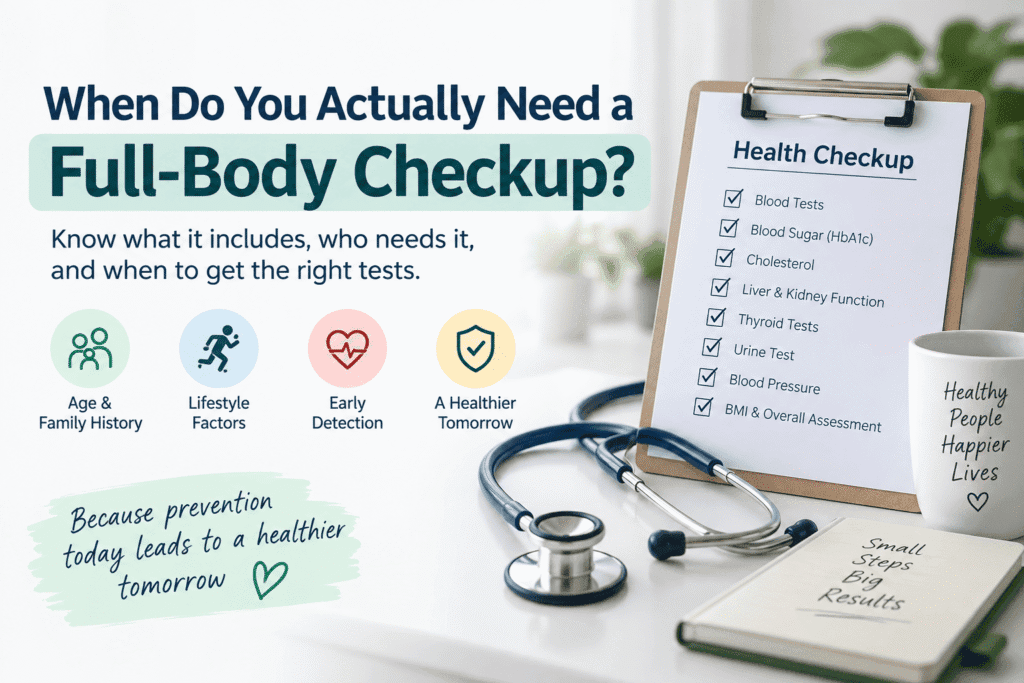
Typically, a checkup may involve assessments like
- Complete Blood Count (CBC)
- Blood sugar test, HbA1c test
- Lipid profile
- Tests for liver and kidney function
- Thyroid Tests
- Urine testing
- Blood pressure readings
- Your weight and Body Mass Index (BMI) evaluations
Your health care provider will consider your age and medical history to suggest other screenings that might be helpful for you. Words like “full body” and “comprehensive” sound promising, but remember it’s important to clarify what’s included to get the most out of your health journey.
Why Do People Get Full Body Checkups?
Most people don’t book a health checkup because they think something is seriously wrong. Often, it’s simply about being proactive. Some health conditions can develop without obvious symptoms. These include high blood pressure, elevated cholesterol, and changes in blood glucose.
A routine health assessment may help identify certain risk factors before they become bigger concerns. It can also give you a baseline. For example, suppose your blood pressure, cholesterol, or blood glucose is measured today. If you have another assessment later, your healthcare professional can compare the newer results with your previous ones.
That trend can sometimes tell a more useful story than a single test result. But there’s an important point to remember: A health checkup is not a guarantee that you’re completely healthy. No collection of tests can detect every possible disease. The purpose is to perform appropriate screening and identify health issues that may need attention.
When Do You Actually Need a Full Body Checkup?
Your healthcare needs depend on several factors, including your age, family history, lifestyle, existing health conditions, previous test results, and symptoms. Here are some situations where a routine health assessment may be worth considering.
1. You Haven’t Had a Health Check in a Long Time
If it’s been several years since you’ve had a general health assessment, a checkup can help establish where things currently stand. You may not need dozens of tests. A healthcare professional can help determine which routine measurements and screenings are appropriate for you. Having a baseline can also make future results easier to understand.
2. You Have a Family History of Certain Diseases
Family history can be very important when it comes to your health; if any of your close relatives have had diseases such as diabetes, heart disease, high blood pressure, certain cancers, thyroid disorders, or other conditions that are familial, your healthcare professional might advise specific screening or monitoring.
However, having a family history doesn’t mean you need every test available. Instead, it can help your doctor decide which tests are relevant and when you may need them.
3. You Have Certain Lifestyle Risk Factors
The way we live can influence our long-term health. The following factors may increase the risk of certain health conditions.
- Tobacco use
- Excessive alcohol consumption
- Lack of physical activity
- Poor diet
- Being overweight or obese
- High levels of ongoing stress
- Poor sleep
- Spending long periods sitting
Depending on your overall health profile, your healthcare professional may recommend monitoring things such as blood pressure, blood glucose, cholesterol, or other relevant markers. The important thing is not to look at one lifestyle factor in isolation. Your overall risk matters.
4. You’re Getting Older
Your health needs naturally change as you move through different stages of life. The screening that makes sense for someone in their 20s may not be the same as what is appropriate in their 40s, 50s, or beyond.
As you get older, your healthcare professional may pay more attention to cardiovascular and metabolic risk, age-appropriate cancer screening, bone health, and other preventive measures. That doesn’t necessarily mean you need a bigger and more expensive checkup package. It means your screening should become more relevant to your individual stage of life.
5. You Have an Existing Health Condition
If you already have a health condition, regular testing may be an important part of your care. For example, certain conditions may require periodic monitoring of blood glucose, kidney function, liver function, thyroid function, cholesterol, or other markers.
In those situations, a general full-body examination might not be the most appropriate choice. Instead, your doctor could suggest a particular set of diagnostic tests that are intended for monitoring your condition and finding out if your treatment is working as it should.
6. You Have Persistent or Unexplained Symptoms
This is where it’s particularly important to understand the difference between a routine checkup and diagnostic testing. If you’ve been experiencing symptoms that don’t go away, don’t simply book a general health package and hope it explains what’s happening.
Symptoms such as persistent fatigue, unexplained weight changes, recurring fever, ongoing pain, dizziness, unusual bleeding, changes in bowel or urinary habits, or other unexplained changes may need proper medical evaluation. Your healthcare professional can assess your symptoms and decide which tests are actually useful.
Full Body Checkup vs Diagnostic Tests
The terms can sound similar, but they serve different purposes.
| FULL BODY CHECKUP | DIAGNOSTIC TESTS |
| Provides a broad overview of health | Investigates a particular health concern |
| Often used as part of preventive care | Usually performed because of symptoms, findings, or suspected conditions |
| May contain several routine laboratory tests | May include laboratory tests, imaging, or specialized investigations |
| Can identify certain health risks | Helps investigate a specific medical question |
| May be performed when you feel healthy | Often used when something needs further evaluation |
Think of it this way:
A general health checkup asks, “How does my health look overall?” Diagnostic testing asks, “Why is this happening, or could I have this particular condition?” For example, someone who feels well may have routine blood pressure, blood glucose, and cholesterol checks.
Someone with persistent abdominal pain may need a clinical examination and specific tests chosen to investigate the cause. Neither approach is automatically better. The right test depends on the reason you’re being tested.
What Tests Are Commonly Included in a Full Body Checkup?
The specific combination may differ, so it’s important to check exactly what is included in the package you have chosen. Below are some common tests and the areas that they generally help to assess:
| TEST | WHAT IT GENERALLY ASSESSES |
| Complete Blood Count(CBC) | Red and white blood cells, haemoglobin, and platelets |
| Blood glucose | Blood sugar level at the time of testing |
| HbA1c | Average blood glucose over the previous few months |
| Lipid profile | Cholesterol and triglyceride levels |
| Liver function tests | Certain markers associated with liver health |
| Kidney function tests | Markers related to kidney function |
| Thyroid tests | Thyroid function |
| Urine examination | Certain urinary and metabolic abnormalities |
| Blood pressure | Blood pressure and cardiovascular risk |
These tests can provide useful information, but they don’t tell you everything about your health.
1.Complete Blood Count
A Complete Blood Count (CBC) is one of the most commonly performed blood tests. It measures different blood components, including red blood cells, white blood cells, haemoglobin, and platelets. Changes in these values may provide clues about conditions such as anaemia or certain blood abnormalities. But an abnormal test doesn’t necessarily mean a particular disease. Your doctor will interpret it in conjunction with your symptoms and other findings.
2.Blood Glucose and HbA1c
Blood glucose testing measures your blood sugar at a particular point in time. HbA1c is different. It provides an estimate of average blood glucose over roughly the previous two to three months. Both may be used to screen for or monitor diabetes and related conditions, depending on your individual circumstances.
3.Lipid Profile
A lipid profile generally measures cholesterol and triglycerides. It’s commonly used when assessing cardiovascular risk. But your cholesterol results are not interpreted in isolation. Your age, blood pressure, smoking status, family history, existing conditions, and other factors may also impact your overall cardiovascular risk.
4.Liver and Kidney Function Tests
A range of blood markers are used in liver and kidney function testing that can offer insight into the operational state of these organs. But an abnormal result doesn’t necessarily mean serious organ disease. Medications, dehydration, pre-existing conditions, and other factors can influence test results. This is why a healthcare professional must interpret this.
5.Thyroid Tests
Thyroid tests can help assess thyroid function when testing is clinically appropriate. They may be recommended when symptoms or medical history suggest a thyroid problem or when monitoring an already diagnosed condition. Simply having a thyroid test included in a large package doesn’t necessarily mean everyone needs repeated thyroid testing.
Does Everyone Need the Same Tests?
Absolutely not. Your healthcare needs are personal, and there is no one-size-fits-all approach to health testing. Even two people of the same age may need different tests based on their medical history and risk factors. Your healthcare professional may consider factors such as your age, sex, family history, lifestyle, existing medical conditions, current medications, previous test results, current symptoms, and other relevant health risks. Looking at these factors helps ensure that the tests you undergo are appropriate for you and provide meaningful information about your overall health.
Is More Testing Always Better?
It’s easy to assume that a package with 50 or 100 tests must be better than one with 20. But healthcare doesn’t work quite that way. Every medical test has a purpose, and every test also has limitations. When testing is performed without a clear reason, an unexpected result may sometimes lead to repeat tests or additional investigations.
That can mean extra cost, worry, and appointments without necessarily improving your health. This doesn’t mean diagnostic tests are unnecessary. Quite the opposite: when there is a clear medical reason, the right test can be extremely valuable. The key is appropriate testing, not maximum testing.
Should You Get a Full Body Checkup Every Year?
There isn’t a universal rule that says everyone needs a full body checkup once every 12 months. Some people may benefit from regular preventive health assessments, while others may need specific tests at intervals recommended by their healthcare professional.
Instead of asking: “Do I need a full body checkup every year?”
Try asking: “Which health screenings and tests are appropriate for me at this stage of my life?”
Full Body Checkup by Age
Your age can influence your preventive healthcare needs, although age alone doesn’t determine which tests you should have.
| AGE GROUP | GENERAL HEALTH FOCUS |
| 20s | Healthy lifestyle, blood pressure, risk assessment, and appropriate preventive screening |
| 30s | Continued preventive care and assessment of lifestyle and family-history risks |
| 40s | Greater attention to cardiovascular and metabolic risk alongside age-appropriate screening |
| 50s | Broader preventive screening and monitoring of chronic disease risks |
| 60+ | Individualized preventive care, chronic disease monitoring, and age-appropriate screening |
These are broad guidelines, not a personal testing schedule. Your actual screening needs should be discussed with a healthcare professional.
What If You Feel Completely Healthy?
Feeling healthy is a great sign, but it doesn’t tell you everything that’s happening inside your body. Some common health conditions can remain unnoticed for a long time. Routine screening may identify certain risk factors before they cause noticeable symptoms.
At the same time, feeling healthy doesn’t mean you should undergo every test available. The goal of preventive healthcare is to identify meaningful risks early, while avoiding tests that aren’t likely to provide useful information.
How to Choose the Right Full Body Checkup Package
If you’re thinking about booking a health checkup, don’t automatically choose the package with the most tests. Instead, take a few minutes to look at what you’re actually getting.
Check the Test List
- Read the package details carefully.
- Two packages can have similar prices but contain very different tests.
Think About Your Health Profile
- Consider your age, family history, lifestyle, existing conditions, medications, and previous test results.
- These factors can help determine which tests may be relevant.
Check Whether Fasting Is Required
- Some tests require fasting, while others don’t.
- Follow the instructions given by your diagnostic laboratory or healthcare professional.
Find Out How Results Are Explained
- A report full of numbers can be confusing.
- Before booking, find out whether a doctor or healthcare professional will help you understand the results and whether follow-up is available if something is abnormal.
How Should You Prepare for a Full Body Checkup?
Preparation depends on the tests included in your package. Before your appointment:
- Check whether you need to fast.
- Follow all preparation instructions.
- It is advisable to bring along earlier medical reports if they are relevant.
- Make a list of the medicines and supplements that you are currently taking.
- Tell the healthcare professional about any conditions you currently have.
- Please list any symptoms you have been having.
- Ask when and how you’ll receive your results.
One important reminder: don’t stop prescribed medication simply because you’re having a health checkup unless your healthcare professional tells you to do so.
What Should You Do After Receiving Your Results?
Getting your report can sometimes feel like getting a report card with a page full of numbers that you don’t know how to interpret. Try not to panic over a single result. A value outside the laboratory’s reference range doesn’t automatically mean you have a disease. Likewise, a result within the reference range doesn’t always rule out a health problem.
Your healthcare professional may consider:
- Your symptoms
- Medical history
- Age
- Medications
- Previous results
- Physical examination
- Laboratory reference ranges
- Other test findings
Sometimes an unexpected result may simply need to be repeated. In other cases, your doctor may recommend additional diagnostic tests.
Frequently Asked Questions
1.What is a full body checkup?
A full body checkup is a combination of health assessments and laboratory tests intended to provide a general overview of your health. The exact tests included can vary between diagnostic centres and healthcare providers.
2.What tests are commonly included in a full body checkup?
Depending on the package, common tests may include a complete blood count (CBC), blood glucose, HbA1c, lipid profile, liver function tests, kidney function tests, thyroid tests, urine examination, and blood pressure measurement.
3.Can a full body checkup detect all diseases?
Not at all; a standard full-body checkup is not able to identify all diseases. Certain conditions necessitate particular diagnostic tests, imaging, physical examinations, or an assessment by a specialist according to the symptoms and medical history.
4.Do I need to fast before a full body checkup?
It is contingent upon the tests that are part of your package. Some blood tests require fasting; others do not. Always follow the preparation instructions given by your health care provider or diagnostic laboratory.
5.What should I do if my test results are abnormal?
Don’t panic. An abnormal result does not automatically mean that you have a disease. Discuss your results with a qualified healthcare professional, who can interpret them in context and recommend repeat testing or further evaluation if needed.
Conclusion
So, when do you actually need a full body checkup? You may benefit from a routine health assessment if you haven’t had one recently, have certain risk factors, are due for age-appropriate screening, or want to establish a baseline for your health. You aren’t obliged to have all the tests that are included in each package.
If you’re suffering from particular or ongoing symptoms, it’s not a good idea to rely on a general full-body examination to reach a conclusion. A suitable medical assessment together with specific diagnostic tests might be more suitable. Ultimately, the best health checkup isn’t the one with the longest list of tests. It’s the one that gives you the right information at the right time and helps you take the right next step.
References:
- https://www.uspreventiveservicestaskforce.org/uspstf/recommendation/hypertension-in-adults-screening
- https://www.uspreventiveservicestaskforce.org/uspstf/recommendation/screening-for-prediabetes-and-type-2-diabetes
- https://www.niddk.nih.gov/health-information/diagnostic-tests/a1c-test
- https://medlineplus.gov/lab-tests/complete-blood-count-cbc/
- https://www.fda.gov/consumers/consumer-updates/understanding-medical-tests-and-test-results