Quick Answer
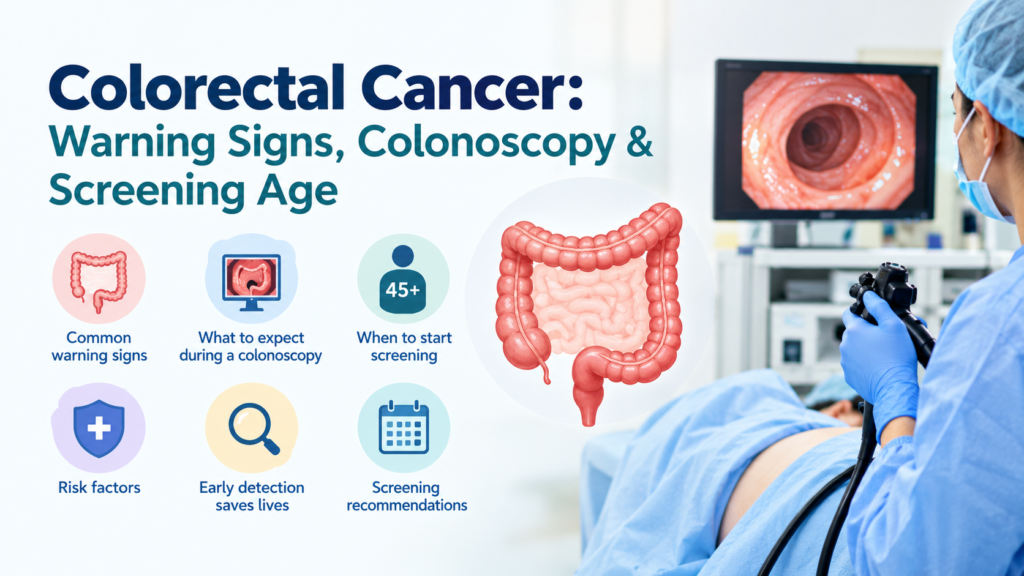
Colorectal cancer may produce symptoms such as blood in the stool, persistent changes in bowel habits, abdominal pain or cramping, unexplained weight loss, and unusual tiredness. Yet early colorectal cancer might cause no symptoms at all. For adults who are of average risk, the main guidelines suggest that colorectal cancer screening should begin at the age of 45.
Colorectal cancer is one of the most common types of cancer that affects the colon and the rectum; it may progress slowly and is often started by the presence of small growths known as polyps. Since some of these polyps can later turn into cancer, screening is important for prevention and for the early detection of the disease.
A difficult aspect of colorectal cancer is that it often produces no noticeable symptoms in its early stages, so it’s possible for someone to have polyps or colorectal cancer without being aware of it. Having regular screenings can help in detecting abnormalities before they lead to symptoms or in identifying cancer at an earlier stage.
What Is Colorectal Cancer?
Colorectal cancer occurs in either the colon or the rectum, both of which make up most of the large intestine.
In numerous instances, colorectal cancer arises from abnormal growths known as polyps. It is not true that every polyp will become cancer, but some kinds can slowly turn into cancer after a period of time.
Screening can be used to identify these polyps and, in procedures like a colonoscopy, enables doctors to remove them before they turn into cancer. It can also pick up colorectal cancer in its early stages, when treatment might then be more effective.
Warning Signs of Colorectal Cancer
Colorectal cancer often has no symptoms, especially in the early stages; however, when symptoms do appear, they can be:
1. The presence of blood in or on the stool
Blood in the stool may appear as bright red blood, or it may make the stool look darker.
Rectal bleeding may be due to a number of causes, such as haemorrhoids and other disorders of the gastrointestinal tract. Yet, bleeding that is unexplained or continues over a period of time should not be overlooked.
2. Changes in Bowel Habits
Changes in how often you have bowel movements, their consistency, or appearance can signal a problem. You might notice diarrhea, constipation, or stools that look different than usual. Sometimes, you may see blood in your stool. These changes could point to a digestive issue or another health problem. If you notice lasting changes, talk to your doctor.
A noticeable change in your usual bowel pattern may include:
- Persistent diarrhea or constipation
- More frequent or less frequent bowel movements
- A feeling that the bowel has not completely emptied
- Changes in the appearance or consistency of stool
A one-off change might not be a cause for concern, but if the changes continue, they should be brought to a healthcare professional.
3. A continuous pain in the abdomen or cramping
Among people who have colorectal cancer, there might be a continuing sensation of abdominal pain, cramps, aches, or discomfort.
Since many conditions other than cancer can cause these symptoms, it is more important to find the underlying cause than to make the worst assumption.
4. Unexplained Weight Loss
It is sometimes possible that a person will lose weight even if they do not attempt to alter their diet or exercise routine; this may be a sign of an underlying health issue.
Unexplained weight loss is a symptom which should be looked into, especially in cases where it occurs together with bowel changes or other digestive symptoms.
5. Feeling tired or weak continuously
Colorectal cancer may, in some cases, lead to slow bleeding which can contribute to iron-deficiency anemia, and this in turn may cause tiredness, weakness, or a reduction in energy.
Your doctor might suggest further investigation to find the cause if the blood tests indicate unexplained anemia.
At what age should colorectal cancer screening start?
Major guidelines suggest that people who are of average risk should start having regular colorectal cancer screening at the age of 45.
The American Cancer Society suggests that people at average risk should have regular screening beginning at the age of 45, and the USPSTF recommends that adults be screened between the ages of 45 and 75.
The decision for adults aged between 76 and 85 to continue with screening is usually made on an individual basis by taking into account things such as their general health, past experience with screening, life expectancy, and their own personal preferences.
It is important to note that these recommendations concern individuals who have no symptoms and who are regarded as being of average risk; those who have certain risk factors may need to start screening at an earlier age.
Which People Might Need Early Screening?
If you are at greater risk of colorectal cancer, you might need a different screening schedule.
Risk factors can include:
- A personal history of colorectal cancer or certain polyps
- A family history of colorectal cancer or colorectal polyps
- Inflammatory bowel disease, including Crohn’s disease or ulcerative colitis
- Certain inherited conditions, such as Lynch syndrome or familial adenomatous polyposis (FAP)
If you have any of these risk factors, you should discuss with your healthcare provider when screening should start and how often you should be screened.
What Is a Colonoscopy?
A colonoscopy is a procedure by which a healthcare professional is able to examine the inside of the rectum and the whole colon.
A long and flexible tube fitted with a small camera is gently inserted through the rectum; the camera then shows the intestinal lining.
A colonoscopy can help identify:
- Polyps
- Abnormal tissue
- Sources of bleeding
- Inflammation
- Colorectal cancer
A major benefit of having a colonoscopy is that it enables many polyps to be removed during the procedure and then sent off for laboratory analysis.
What takes place during a colonoscopy?
Before the Colonoscopy
So that the doctor will be able to see the lining of the colon clearly, the colon must be clean.
Before the procedure, you will generally be given specific instructions regarding diet and preparation for cleansing your bowel. Your healthcare provider might also give you some instructions about medications.
It is important to carefully follow the preparation instructions since poor bowel preparation can make it difficult to spot abnormalities.
During the Procedure
You can be given medication to help you relax or go to sleep during the procedure.
The colonoscope is carefully passed through the colon as the healthcare professional examines the intestinal lining, and if a polyp or a suspicious area is discovered, it might be removed or taken as a sample.
After the Procedure
It is possible for certain individuals to feel temporary bloating, abdominal discomfort, or have gas following a colonoscopy.
You might need a companion to take you home if you have received sedation and should therefore follow the instructions given by your healthcare team.
Is the colonoscopy the only available screening test?
No; there are several available options for colorectal cancer screening.
Depending on your circumstances, screening may involve:
- The fecal immunochemical test (FIT) detects hidden blood in the stool.
- The Stool DNA-FIT test looks for blood and certain DNA changes that are associated with colorectal cancer.
- The faecal occult blood test based on guaiac (gFOBT) is able to detect blood that is not visible in the stool.
- CT colonography involves using CT imaging to examine the colon.
- Flexible sigmoidoscopy involves examining the rectum and the lower section of the colon.
- A colonoscopy allows the entire colon to be examined and provides the opportunity to remove polyps during the procedure.
Various tests have different intervals for screening and different requirements regarding preparation. In the case where a stool-based test or some other non-colonoscopy screening test yields an abnormal result, a follow-up colonoscopy might be necessary.
How frequently is a colonoscopy required?
The USPSTF recommends that colonoscopy be carried out every ten years as one of the screening strategies for average-risk adults when colonoscopy is the chosen screening test.
The recommended interval may, however, vary if polyps are discovered, if there is a personal or family history of colorectal cancer, or if you have another condition which increases your risk.
Your doctor will set the correct interval according to your particular case and the results you have had before.
Can colorectal cancer be prevented?
It is impossible to prevent all instances of colorectal cancer, but screening is an important measure for reducing risk since it enables the detection and removal of some precancerous polyps.
A healthy way of living may likewise help to reduce the risk of colorectal cancer. This involves:
- Eating a diet rich in vegetables, fruits, and whole grains
- Staying physically active
- Maintaining a healthy body weight
- Avoiding tobacco
- Limiting alcohol consumption
- Following recommended screening schedules
Most important of all, do not wait for any symptoms before considering screening, since screening is intended to identify colorectal cancer and any precancerous changes before symptoms appear.
When is it time to see a doctor?
Talk to a healthcare professional if you notice:
- Blood in or on your stool
- Persistent diarrhea or constipation
- A lasting change in bowel habits
- Abdominal pain or cramping that does not go away
- Unexplained weight loss
- Unexplained anemia or persistent tiredness
The fact that you have these symptoms doesn’t mean that you definitely have colorectal cancer, since a number of other conditions may cause them as well. That said, it is important to have a medical evaluation in order to find out what the cause is.
Frequently Asked Questions
1. At what age should colorectal cancer screening begin?
Regular colorectal cancer screening should be started at the age of 45 for adults who are at average risk, according to major guidelines.
2. Is it necessary for every individual over 45 to have a colonoscopy?
It doesn’t have to be. While colonoscopy is one of the screening methods, there are several other tests available, such as those based on stool and other kinds of examinations. The right choice will vary according to an individual’s risk level, preferences, accessibility, and medical advice.
3. Does the presence of blood in the stool always indicate colorectal cancer?
Certainly, conditions like hemorrhoids and various other gastrointestinal disorders can lead to bleeding from the rectum. Yet, if there is blood in the stool that continues or occurs without any obvious reason, it is advisable to have it looked at by a medical professional.
4. Is it possible for colorectal cancer to occur in the absence of symptoms?
Yes, polyps and colorectal cancer can be asymptomatic, especially in the early stages, which is one of the reasons why regular screening is important.
5. How frequently should a healthy individual have a colonoscopy?
The USPSTF recommends that adults with average risk who opt for colonoscopy should have the procedure every 10 years; those who have increased risk or who show abnormaL findings may require a different interval.
6. What would occur if a polyp is discovered during a colonoscopy?
Polyps can be removed during a colonoscopy and then sent off to a laboratory for examination, and the type, size, and number of the polyps will affect the timing of your next screening or surveillance examination.
7. Can younger people get colorectal cancer?
Certainly. Even though the risk usually goes up as people get older, colorectal cancer can affect young adults as well. In cases where someone has symptoms or particular risk factors, they might need evaluation or screening before the standard age for people who are at average risk.
Conclusion
Colorectal cancer can progress slowly, and for this reason, screening is an important element in prevention and early detection. For adults who are of average risk, screening usually starts at the age of 45, whereas those with a family history, inflammatory bowel disease, certain genetic conditions, or other risk factors may require an earlier or more tailored screening programme.
A colonoscopy is one of the screening methods that enables doctors to carry out a full examination of the colon and to remove a number of polyps at the same time. It is not the only screening method available.
If you find that your bowel habits are changing in a persistent way, if there is blood in your stool, if you are experiencing unexplained weight loss, or if you have unusual tiredness, then you should consult a healthcare professional instead of waiting until your next routine screening.
References:
1.https://www.cdc.gov/colorectal-cancer/symptoms/index.html
2.https://www.cdc.gov/colorectal-cancer/screening/index.html
5.https://www.uspreventiveservicestaskforce.org/uspstf/recommendation/colorectal-cancer-screening
6.https://pubmed.ncbi.nlm.nih.gov/34003218/