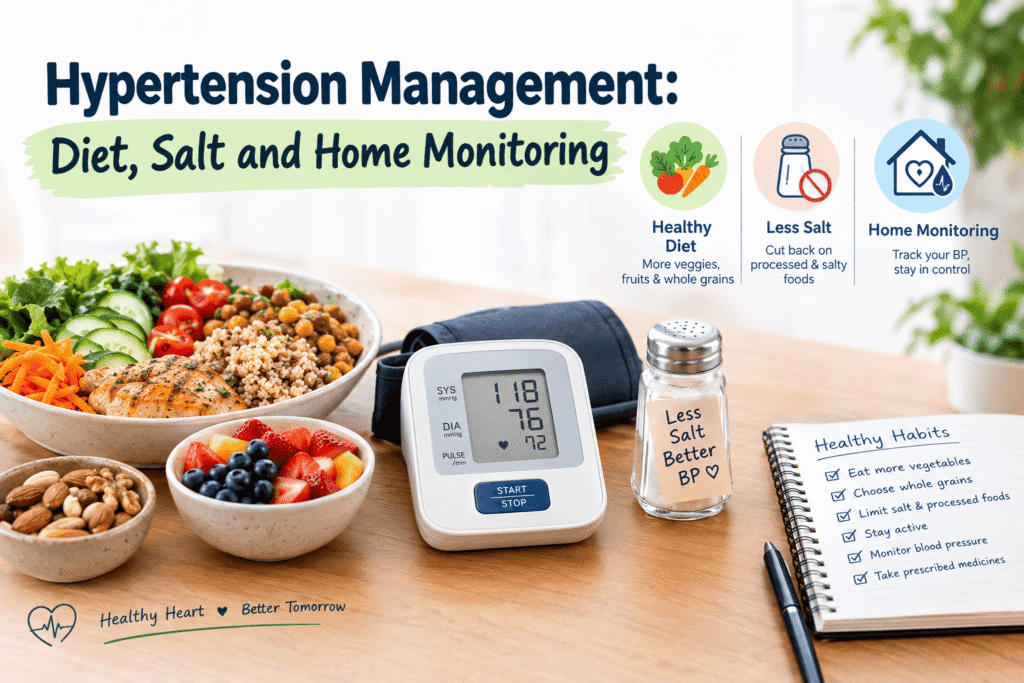
Quick Answer: High blood pressure can be easy to overlook because it often causes no obvious symptoms, even while affecting the body over time. Following a high blood pressure diet with more vegetables and fruits, while cutting back on salty and processed foods, can support healthy BP.
Introduction
High blood pressure, also known as hypertension, is one of those health conditions that can quietly develop without making you feel unwell. Many people continue with their daily routines without realizing that their blood pressure is consistently higher than it should be. Over time, however, uncontrolled hypertension can place extra strain on the heart and blood vessels and affect organs such as the kidneys, brain, and eyes.
A positive aspect is that high blood pressure can generally be managed by making healthy lifestyle choices, regularly monitoring it, and taking medication whenever it’s prescribed. Diet plays an important role in this situation. A diet suitable for people with high blood pressure does not require giving up traditional foods or eating plain meals; instead, it consists of making reasonable changes, particularly by reducing excess sodium and choosing more nutrient-rich foods.
The DASH (Dietary Approaches to Stop Hypertension) eating pattern is one well-studied approach to managing blood pressure. It focuses on vegetables, fruits, whole grains, pulses, nuts, low-fat dairy products, and lean protein while limiting sodium, saturated fat, and added sugars. These principles can easily be adapted to everyday Indian meals.
What Is Hypertension?
Blood pressure is the force of blood pushing against the walls of your arteries as the heart pumps blood around the body. A blood pressure reading has two numbers:
- Systolic pressure: the pressure when the heart contracts.
- Diastolic pressure: the pressure when the heart relaxes between beats.
Persistently elevated blood pressure can damage the blood vessels over time. The exact blood pressure level considered high can depend on the guideline and individual circumstances, so diagnosis should be based on properly taken measurements and advice from a healthcare professional.
A single high reading does not necessarily mean that someone has hypertension. Blood pressure can temporarily rise because of stress, caffeine, exercise, pain, illness, or even an incorrectly fitted cuff. This is why accurate home blood pressure monitoring can be useful.
Why Is High Blood Pressure Called a Silent Condition?
Hypertension is often called a “silent” condition because many people have no obvious symptoms even when their blood pressure remains elevated. You cannot reliably tell whether your blood pressure is high simply by how you feel.
Some people may experience symptoms such as headaches or dizziness, particularly when blood pressure becomes very high, but many people experience none at all. This is why regular blood pressure checks are important, especially for people who have been advised to monitor their blood pressure.
How Can Uncontrolled Hypertension Affect the Body?
- When blood pressure remains elevated for a long time, the heart and blood vessels are exposed to increased pressure. This can gradually contribute to cardiovascular problems.
- The heart may have to work harder to pump blood, while prolonged pressure on the blood vessels can contribute to changes in their structure and function. Hypertension is also an important risk factor for stroke because it can damage blood vessels supplying the brain.
- The kidneys are also at risk. They have a large number of small blood vessels which aid in the filtering of waste from the blood, and if high blood pressure is persistent, then it can cause damage to these vessels over time. In a similar way, the small blood vessels that supply the eyes can be affected, and this may lead to vision problems.
- This is why controlling blood pressure is about more than achieving a particular number on a monitor. It is an important part of protecting your health over the long term.
How to Monitor Blood Pressure Correctly at Home
Home blood pressure monitoring can help you understand how your blood pressure behaves outside a doctor’s office. It can also provide useful information to your healthcare professional when evaluating your treatment.
For home use, the American Heart Association recommends an automatic, upper-arm blood pressure monitor. Wrist and finger monitors are generally considered less reliable. Choosing a monitor with the correct cuff size is also important because an incorrectly sized cuff can affect the reading.
Follow These Steps for an Accurate Reading
Step 1: Before you check your blood pressure, allow your body a few minutes to calm down. Stay away from exercise, smoking, and drinks containing caffeine for at least 30 minutes prior, and empty your bladder if it’s necessary.
Step 2: Sit comfortably in a chair with your back supported and both feet flat on the floor. Keep your legs uncrossed and rest your arm on a table or another flat surface so that the cuff is approximately at heart level.
Step 3: Put the cuff onto your bare upper arm rather than having it cover any clothing. The lower edge should be positioned just above the elbow bend. When you have arranged everything properly, stay completely quiet and still as the monitor takes the reading.
Step 4: It is generally useful to take two readings approximately one minute apart and record the results. If your healthcare professional has provided a specific monitoring schedule, follow those instructions.
Each time you measure your blood pressure, try to do so under the same conditions and keep a written or digital record because this will make it easier to spot patterns and pass on useful information to your healthcare professional.
Remember: Home monitoring should support your medical care, not replace it. Never stop or change prescribed blood pressure medicines without discussing it with your healthcare professional.
What Is a High Blood Pressure Diet?
Your eating habits can have a meaningful role in blood pressure management. Rather than thinking about a “hypertension diet” as a strict list of foods you can and cannot eat, it can be more helpful to think about your overall eating pattern.
The DASH eating plan is designed around vegetables, fruits, whole grains, beans, nuts, low-fat dairy products, fish, poultry, and other lean sources of protein. It also encourages limiting foods high in sodium, saturated fat, and added sugars.
For an Indian diet, this does not require replacing everything in your kitchen. Familiar foods such as dal, roti, rice, idli, dosa, vegetables, curd, sprouts, and fruits can all fit into a heart-friendly eating pattern. The key is how often you eat them, how they are prepared, and how much salt and oil are added.
DASH Diet Adapted to Indian Meals
The DASH approach can be easily adapted to familiar Indian meals without making major changes to your usual eating habits. The table below gives a simple guide to making everyday meal choices more suitable for blood pressure management.
| Meal | Indian-friendly choices | What to keep in mind |
| Breakfast | Idli with vegetable sambar, vegetable poha, moong dal/besan chilla, vegetable upma, or dosa with limited oil | Keep added salt moderate and include vegetables where possible |
| Lunch | Roti or a moderate portion of rice with dal, vegetables, salad and plain curd | Focus on a balanced plate rather than eliminating rice |
| Evening snack | Fresh fruit, unsalted nuts, roasted chana, sprouts or plain yogurt | Limit chips, namkeen, salted biscuits and instant noodles |
| Dinner | Roti with dal and vegetables, vegetable khichdi, or a moderate portion of rice with dal and vegetables | Keep dinner simple and avoid heavily salted or processed foods |
How Much Salt Should You Eat Per Day?
Salt reduction is one of the most important dietary considerations when managing high blood pressure.
The World Health Organization recommends that adults consume less than 2,000 mg of sodium per day, which is equivalent to less than 5 grams of salt per day, or approximately one teaspoon. This refers to the total amount of salt consumed from all sources, including food preparation, packaged foods, restaurant meals, sauces, pickles, and other products.
The DASH eating plan commonly uses a sodium target of 2,300 mg per day, while a lower intake of around 1,500 mg per day may provide an additional blood-pressure-lowering effect for some people.
Where Does All That Sodium Come From?
Many people associate salt only with what they add while cooking or at the dining table. However, sodium can also come from foods that do not necessarily taste extremely salty.
Pickles, papad, salted nuts, packaged snacks, instant noodles, processed meats, sauces, ready-to-eat foods, restaurant meals, and some packaged spice mixes can all contribute to your daily sodium intake.
This is why reducing salt is not simply about putting the salt shaker away. Paying attention to packaged foods and salty accompaniments can make a significant difference.
How to Reduce Salt Without Losing Flavor
You don’t have to eat meals that are tasteless if you reduce the amount of salt. Indian cooking already has a variety of methods for adding flavour. Garlic, ginger, cumin, coriander, turmeric, black pepper, curry leaves, green chilli, and fresh herbs can all contribute to the taste without needing a lot of salt, and lemon juice can also enhance the flavours of a number of dishes.
You may still eat foods like pickles and papad, but it is important to control the amount you have. Consuming a number of salty sides at one meal can cause your sodium intake to rise quickly, so make it a point to eat them only occasionally and in smaller quantities.
If you are buying packaged foods, make sure to check the nutrition label for sodium and note the serving size, since a package may contain more than one serving and therefore eating the whole package could mean that you are taking in a great deal more sodium than the amount stated per serving.
It is also worth remembering that words such as “multigrain” or “healthy” on the front of a package do not necessarily mean that the product is low in sodium. Checking the nutrition information gives you a better idea of what you are actually eating.
Foods to Include in a High Blood Pressure Diet
A balanced high blood pressure diet can include plenty of vegetables and fruits, whole grains, dal and other pulses, beans, unsalted nuts and seeds, and low-fat dairy products. Fish and skinless poultry can be included if they are part of your diet.
These foods provide nutrients such as potassium, calcium, magnesium, fiber, and protein, which are important components of the DASH eating pattern.
Rather than focusing on one “superfood” for blood pressure, aim for variety. A plate containing different vegetables, a source of protein, and an appropriate portion of whole grains is generally more useful than relying on one particular food.
Foods to Limit
Highly processed or heavily salted foods should best be avoided; this applies to packaged salty snacks, instant noodles, processed meats, heavily salted pickles and papad, and foods high in saturated fat.
It is also helpful to limit frequent consumption of sugar-sweetened beverages, sweets, and heavily fried foods. You do not necessarily have to completely remove your favorite foods from your diet. Eating them less often and in sensible portions can make a healthy eating pattern easier to maintain.
Other Lifestyle Habits That Matter
Managing hypertension involves more than just diet; regular physical activity, keeping to a healthy weight where appropriate, avoiding tobacco, getting enough sleep, managing stress, and taking the prescribed medicines correctly can all contribute to improved cardiovascular health.
If you have been diagnosed with hypertension, work with your healthcare professional to determine your blood pressure goals and the lifestyle changes that are appropriate for you.
Frequently Asked Questions
1. What is the best diet for high blood pressure?
The DASH eating pattern is a well-studied approach for managing blood pressure. It emphasizes vegetables, fruits, whole grains, pulses, nuts, low-fat dairy products, and lean protein while limiting sodium, saturated fat, and added sugars.
2. How much salt should I eat if I have high blood pressure?
WHO recommends that adults consume less than 5 grams of salt per day, equivalent to less than 2,000 mg of sodium. This includes salt from all food sources, not just what you add while cooking.
3. Can I eat rice if I have hypertension?
Certainly, it is not essential to get rid of rice when you have high blood pressure. All you need to do is control the amount you eat and serve it with vegetables, dal, beans, or some other nutritious type of protein. You can also include whole-grain alternatives if you like them.
4. How can I get an accurate blood pressure reading at home?
When using an automatic upper-arm blood pressure monitor, it is important to use one with the right cuff size. Before taking the measurement, you should rest in a quiet position for at least five minutes, keep your back supported and have your feet flat on the floor, position your arm so that it is at heart level, and avoid talking during the reading. Taking two measurements about one minute apart will yield more useful information.
5. Can I stop my blood pressure medicine if my readings are normal?
No. Do not stop or change prescribed medication on your own. Normal readings may indicate that your current treatment and lifestyle changes are working. Any medication adjustment should be discussed with your healthcare professional.
Conclusion
High blood pressure can be silent, yet it may have serious long-term effects. One can help keep blood pressure under control by carrying out regular home measurements, reducing intake of excess salt, adopting a well-balanced diet in the style of DASH, remaining active, and taking the treatment that has been prescribed.
You don’t have to give up Indian food if you’re on a diet for high blood pressure. It is possible to achieve healthier eating by making small and gradual changes, such as increasing your intake of vegetables and pulses and, at the same time, reducing the amount of salty and highly processed foods.
References
- https://www.nhlbi.nih.gov/health/dash-eating-plan
- https://www.heart.org/en/health-topics/high-blood-pressure/understanding-blood-pressure-readings/monitoring-your-blood-pressure-at-home
- https://www.who.int/news-room/fact-sheets/detail/sodium-reduction
- https://www.who.int/news-room/fact-sheets/detail/healthy-diet
- https://www.cdc.gov/high-blood-pressure/about/index.html
- https://www.nice.org.uk/guidance/ng136