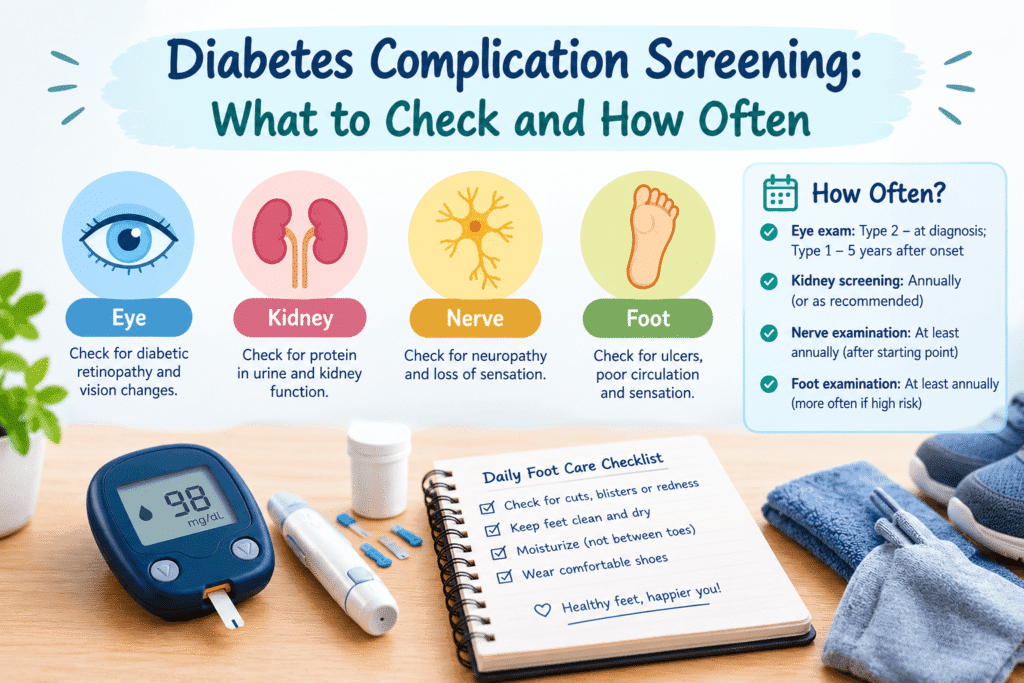
Quick Answer: People with diabetes should have their eyes, kidneys, nerves, and feet checked once a year in order to detect any complications at an early stage. It is also useful to carry out daily inspections of the feet and to regularly monitor both blood glucose levels and HbA1c in order to prevent or manage complications associated with diabetes.
Introduction
Diabetes can impact much more than your blood sugar. When blood glucose remains high for long periods, it can gradually harm the eyes, kidneys, nerves, and feet. The problem with noticing these problems is that they do not necessarily produce any obvious symptoms in the early stages. You may feel great while changes are already happening.
That is the reason why routine health checks form an important element of diabetes care. When you have a regular visit, your healthcare professional is able to look for the early signs of any diabetes complications and can then decide if you need any additional tests or further follow-up. There is no need to worry about these checks; they are just a means of keeping an eye on your health and of dealing with any problems that may occur early on.
This guide examines the essential checks for the eyes, kidneys, nerves, and feet for individuals with diabetes. Additionally, you will discover an easy annual screening timetable and a daily foot-care checklist to assist you in maintaining your routine.
Why Are Regular Diabetes Complication Checkups Important?
Diabetes can have an effect on the small blood vessels and nerves throughout the body, and as time goes on, these changes might result in problems with vision, kidney function, sensation, and foot health. The importance of having regular screenings is that some of the complications linked with diabetes may not display any obvious symptoms in their early stages.
Imagine that screening is like preventive maintenance; you don’t have to wait until something goes wrong before checking to see whether everything is working properly.
Diabetes Complications Screening Schedule
There isn’t a one-size-fits-all screening programme for every individual who has diabetes; the suggested timing may vary according to factors including the type and length of the diabetes, previous test results, how well blood glucose is controlled, blood pressure, and any existing complications.
| Examinations | What It Checks | General Timings |
| Eye examination | Eye problems such as diabetic retinopathy | Type 2: generally at diagnosis; Type 1: generally 5 years after onset |
| Kidney screening | Urine albumin and kidney filtration | Generally annually when recommended |
| Nerve examination | Neuropathy and loss of protective sensation | At least annually after the recommended starting point |
| Foot examination | Ulcers, circulation, sensation, and deformities | At least annually; more frequently for high-risk individuals |
The following are general recommendations; however, your healthcare professional might suggest a different one according to your particular risk factors and test results.
1. Diabetes Eye Checkup
How Can Diabetes Affect the Eyes?
One of the better-known eye complications associated with diabetes is diabetic retinopathy. Persistently high blood glucose can damage the small blood vessels in the retina, which is the light-sensitive tissue at the back of the eye. As the condition progresses, these damaged blood vessels can affect vision.
When Should You Have a Diabetic Eye Exam?
The timing of the first eye examination generally depends on the type of diabetes. For people with type 1 diabetes, a comprehensive eye examination is generally recommended about five years after diabetes begins. For people with type 2 diabetes, an initial comprehensive eye examination is generally recommended at the time of diagnosis.
The interval between follow-up examinations will then be determined on the basis of the results of earlier examinations and on the basis of individual risk factors; in some cases, people who show no sign of retinopathy and who have adequate control of their risk factors may have longer periods between visits, whereas those who do have retinopathy will need more frequent monitoring.
What Are Retinopathy Photos?
Retinal photography involves taking photographs of the retina so that healthcare professionals can look for signs of diabetic eye disease. It can be useful for screening when an appropriate system and qualified interpretation are available.
However, retinal photography does not replace a comprehensive eye examination in every situation. If you have diabetes, ask your healthcare professional or eye specialist which type of examination is appropriate for you.
2. Diabetes Kidney Checkup
The kidneys constantly filter waste and any excess fluid out of the blood. Since diabetes can have an effect on the blood vessels and on the filtering parts of the kidneys, it may result in diabetic kidney disease. Luckily, kidney health can be checked with fairly simple blood and urine tests.
What Tests Are Used for Diabetic Kidney Screening?
Two important measurements are commonly used to assess kidney health:
- The urine albumin-to-creatinine ratio (UACR) is a urine test that detects albumin, a protein that under normal circumstances stays in the blood. The presence of increased amounts of albumin in the urine may indicate kidney damage.
- The estimated glomerular filtration rate (eGFR) is calculated on the basis of a blood test and gives an estimate of the efficiency with which the kidneys filter the blood.
Together, UACR and eGFR provide useful information about kidney health and help healthcare professionals monitor changes over time.
How Often Should Kidney Screening Be Done?
NIDDK recommends testing for kidney disease every year for people with type 2 diabetes and for people with type 1 diabetes who have had diabetes for more than five years. If an abnormal result is identified, your healthcare professional may recommend additional testing or more frequent monitoring.
3. Diabetes Nerve Checkup
What Is Diabetic Neuropathy? Diabetic neuropathy is a type of nerve injury associated with diabetes and can impact different nerves, with peripheral neuropathy primarily affecting the legs and feet.
Some people experience:
- Tingling
- Burning sensations
- Numbness
- Shooting or stabbing pain
- Increased sensitivity
- Reduced ability to feel touch or temperature
It is not always the case that neuropathy causes noticeable symptoms, which is one of the reasons why nerve examinations are incorporated into standard diabetes care.
How Is Diabetic Neuropathy Checked?
In the course of a nerve examination, your healthcare professional might assess the extent to which you can feel various kinds of sensation. This could involve testing your ability to sense touch or pressure, vibration, temperature, or a light pinprick, as well as examining your reflexes. Another key aspect of the examination is testing the protective sensation in your feet, since this helps to decide whether a reduced ability to feel might put you at risk of suffering from injuries that go unnoticed.
The ADA suggests that assessment for diabetic peripheral neuropathy should start at the time of diagnosing type 2 diabetes and five years after the diagnosis of type 1 diabetes, with assessments then being carried out at least once a year.
4. Diabetes Foot Checkup
What is the importance of care for foot problems in people with diabetes?
Foot health is something that should be given special attention if you have diabetes. Suppose you get a small blister from a new pair of shoes; in most cases, the discomfort would prompt you to look at your foot. However, if nerve damage has lowered your sense of feeling, you might not notice the wound.
A wound that goes unnoticed may become more serious if it is not looked after properly. Due to diabetes causing nerve damage and circulation problems, the risk of foot ulcers and other complications increases.
Annual Diabetes Screening Calendar
Trying to keep track of several appointments can be confusing, particularly when you need to remember when each test is due. Using a simple calendar can be of help. The schedule given here is only intended as an organizational guide and not as a substitute for the recommendations of your healthcare professional.
January: Review Your Diabetes Care
At the start of the year, take some time to review the way in which you have been looking after your diabetes. This is a good opportunity to discuss with your healthcare professional your blood glucose levels, the medications you are currently taking, your blood pressure, your lifestyle habits, and any previous test results. By looking at these areas, you will be able to identify what is working well and whether any changes need to be made over the coming months.
February – March: Eye Health
Make sure that your diabetic eye exam is upcoming. If it is, then book the examination that has been recommended and keep a record of the results and the suggested follow-up date.
April – June: Kidney Health
Check whether your kidney screening is due. Depending on your individual care plan, this may include:
- UACR
- Serum creatinine
- eGFR
If an abnormal result is found, your healthcare professional may recommend follow-up testing.
July – September: Nerve and Foot Health
Take this time to check over your foot-care routine and ensure that your recommended nerve and foot assessments are current. Look for any numbness or tingling, any changes in sensation, problems with foot circulation, issues with the skin, any foot deformities, and any previous ulcers or wounds.
October–December: End-of-Year Assessment
When the year is coming to an end, make a point of looking back at your screening history.
Think about asking yourself:
- Have I finished the eye examination that I suggested?
- Has anyone carried out the screenings for my kidney health?
- Have my nerve and foot examinations been carried out?
- Should I look at any follow-up appointments I have?
Signs You Should Not Ignore
It is necessary to perform regular screening, but you don’t have to wait until your next scheduled appointment if anything changes. You should see a healthcare professional if you notice any of the following.
- A foot wound or sore
- Increasing redness or swelling
- Signs of infection
- Persistent numbness or burning
- New or worsening vision changes
- Unexplained swelling
- Significant changes in urination
If you experience a sudden loss of vision or any other serious symptom that is developing rapidly, you should have it looked at by a medical professional urgently.
How To Reduce The Risk Of Diabetes Complications?
Diabetes care involves more than just screening; everyday habits and proper medical management are also important.
Keep Blood Glucose Within Your Recommended Range
Talk to your healthcare professional to find out what your individual blood glucose goals should be, and don’t compare your targets to those of someone else’s, since diabetes management has to be tailored to you.
Monitor Blood Pressure and Cholesterol
It is important to manage both blood pressure and cholesterol in order to reduce the health risks associated with cardiovascular and diabetes problems.
Stay Physically Active
Regular physical activity can help with the overall management of diabetes. Select activities that are appropriate for your own health and fitness level.
Take Medicines as Prescribed
You should take any medications that have been prescribed for diabetes, high blood pressure, high cholesterol, or any other condition exactly as your healthcare professional has told you to.
Make Foot Checks a Habit
You needn’t wait until your annual appointment to examine your feet; a daily quick check will help you pick up any changes earlier.
Frequently Asked Questions
1. How often should a person with diabetes have an eye examination?
The schedule varies according to the type of diabetes and the results of earlier eye examinations. Those with type 2 diabetes usually have an eye examination when they are first diagnosed. In contrast, those with type 1 diabetes generally start screening about five years after the onset of the disease. The frequency of follow-up visits will depend on the individual’s risk level and the results of the examinations.
2. What tests check for diabetic kidney disease?
Two common tests are used to keep track of kidney health in people with diabetes. A urine albumin-to-creatinine ratio (UACR) checks for albumin, a protein that normally stays in the blood. If more albumin than expected is found in the urine, it may be an early sign of kidney damage. The other test is estimated glomerular filtration rate (eGFR), which is calculated from a blood test and gives an idea of how well the kidneys are filtering the blood.
3. Can diabetic retinopathy occur without symptoms?
Yes, early diabetic retinopathy might not result in any noticeable changes to vision, and it is for this reason that regular eye screening is important even if your eyesight appears normal.
4. Why is it important to check your feet every day if you have diabetes?
Doing daily checks of your feet can enable you to detect small problems such as cuts, blisters, redness, swelling, or sores before they become more serious. This is particularly important in the case where you have decreased sensation in your feet, since you may not always feel an injury as it occurs.
5. When should I contact a healthcare professional about a foot problem?
Contact your healthcare professional if you notice a wound that is not healing, increasing redness or swelling, signs of infection, or any other unusual change in your foot. It is better to have a concerning problem checked early rather than wait for it to get worse.
Conclusion
Taking care of diabetes goes beyond simply checking your blood glucose levels. When you regularly look after your eyes, kidneys, nerves, and feet, this enables you to detect possible complications before they become more serious. It is essential to stick to the recommended screenings since some complications associated with diabetes may appear without any noticeable symptoms.
A simple way to remember the four key areas is:
- Eyes are used as a method for screening diabetic retinopathy.
- Monitoring of the kidneys should take place in terms of UACR and eGFR when it is recommended.
- Look along the nerves for any alterations in sensation and for the presence of neuropathy.
- One should carry out regular self-examinations of the feet and have any clinical examinations that are recommended carried out.
It is not necessary for you to deal with all matters at once; simply keep a simple record of your appointments, adhere to the screening schedule that your healthcare professional has recommended, and make daily foot care a regular part of your routine.
References
- https://diabetesjournals.org/care/article/49/Supplement_1/S261/163919/12-Retinopathy-Neuropathy-and-Foot-Care-Standards
- https://www.niddk.nih.gov/health-information/diabetes/overview/preventing-problems/diabetic-kidney-diseas
- https://www.niddk.nih.gov/health-information/professionals/advanced-search/quick-reference-uacr-gf
- https://www.cdc.gov/diabetes/diabetes-complications/diabetes-and-your-feet.html
- https://www.nei.nih.gov/eye-health-information/eye-conditions-and-diseases/diabetic-retinopathy
- https://www.cdc.gov/diabetes/hcp/clinical-guidance/diabetes-podiatrist-health.html