Introduction
Kidneys are two bean-shaped organs that filter waste, balance fluids, regulate blood pressure, and help maintain healthy bones and red blood cells. In essence, they act as cleaning organs. Our diet plays an important role in kidney health. The foods we eat can either damage or protect our kidneys over time.
Bad eating habits, too much salt intake, sugary foods, dehydration, and processed foods can increase the risk of kidney disease. On the other hand, healthy dietary choices can help your kidneys function properly and lower the risk of chronic kidney disease (CKD).
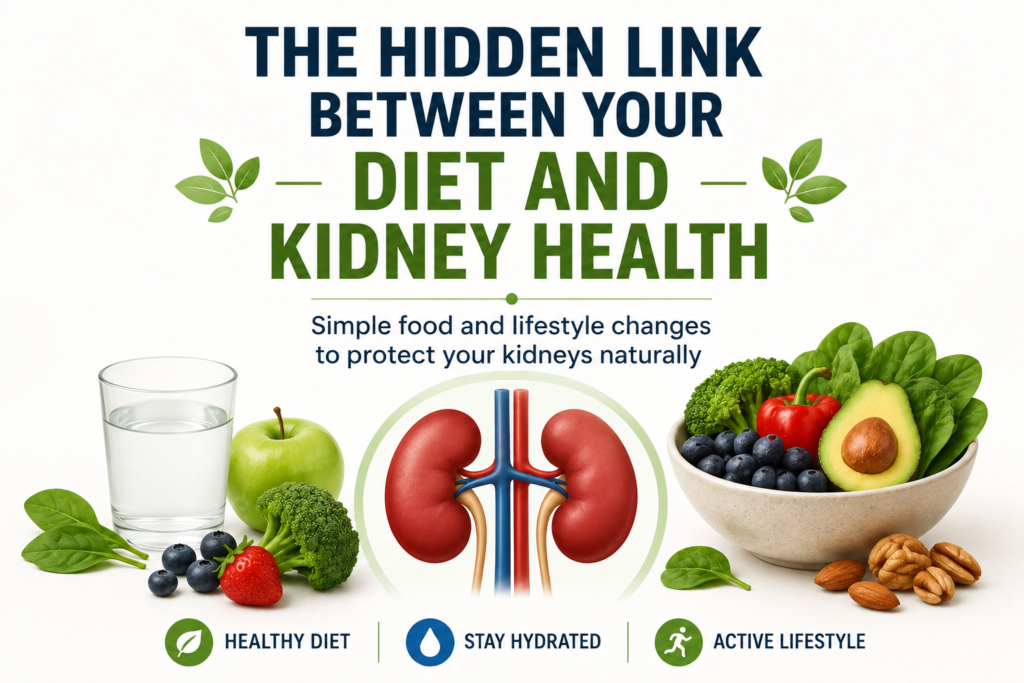
In this article, we’ll discuss the connection between diet and kidney health, the best foods for kidney health, and simple lifestyle changes that will naturally protect your kidneys.
Function of the Kidneys
The kidneys are two organs found at the back of the abdomen whose function is to filter blood and remove waste products from it as urine.
The kidneys help:
- Remove toxins and waste products, e.g., urea
- Balance fluids in the body
- Control blood pressure
- Maintain electrolyte balance
- Support red blood cell production
- Keep bones healthy
About 50 gallons of blood are filtered by your kidneys every day, and since they are always working, they are affected by lifestyle and dietary habits.
Your kidneys process many of the nutrients, minerals, and waste products of the food you eat. The kidneys have to work harder if your diet is unhealthy.
Poor nutrition may lead to:
- High blood pressure
- Diabetes
- Obesity
- Kidney stones
- Chronic kidney disease
Studies show that diabetes and high blood pressure are the leading causes of kidney disease worldwide, and are both strongly linked to diet.
Trusted resource: Centers for Disease Control and Prevention – Kidney Disease
Foods That Can Harm Your Kidneys
1. Too Much Salt (Sodium)
Consuming too much salt leads to water retention and an increase in blood pressure, which puts stress on the kidneys.
Common high-salt foods:
- Snacks (chips)
- Processed meats (bacon, ham)
- Fast food (fried foods)
- Canned soups
Healthier alternative: Use herbs and spices instead of extra salt.
2. Sugary Foods and Drinks
Excess sugar contributes to obesity and type 2 diabetes, which can damage the kidneys over time. Diets high in sugar cause the kidneys to overwork, which leads to inflammation, high blood pressure, and kidney damage.
Avoid:
- Sugary drinks (sodas, sweetened juices)
- Candy
- Desserts with high sugar content
3. Processed Foods
Many processed foods are loaded with added salt, preservatives, or phosphates, which can further overload the kidneys.
These include:
- Frozen foods
- Biscuits
- Artificial additives
Home-cooked meals are healthier and give better control over the ingredients.
Best Foods for Healthy Kidneys
The good news is that many nutritious foods help support kidney function.
1. Fruits and Vegetables
Vegetables and fruits contain antioxidants that help reduce inflammation.
Good choices include:
- Apples
- Berries
- Cabbage
- Cauliflower
- Spinach
2. Healthy Proteins
Too much processed or red meat may increase kidney workload.
Better protein options:
- Fish
- Eggs
- Beans
- Lentils
- Skinless chicken
3. Whole Grains
Whole grains support heart health and blood sugar control.
Examples:
- Brown rice
- Oats
- Quinoa
- Whole wheat bread
4. Healthy Fats
Healthy fats reduce inflammation and support overall health.
Include:
- Olive oil
- Nuts
- Seeds
- Avocados
The Importance of Hydration
Proper hydration is important as it helps dissolve products such as urea and excess salts. Poor hydration causes urine to become concentrated, making it difficult to flush out toxins.
Benefits of drinking enough water:
- Supports filtration
- Helps prevent kidney stones
- Maintains healthy urine flow
Signs of dehydration:
- Dark urine with a strong smell
- Dizziness
- Dry mouth
- Fatigue
Lifestyle Habits That Protect Your Kidneys
Diet alone is not enough. Healthy lifestyle habits also play a major role.
1. Exercise Regularly
Physical activity helps:
- Lower blood pressure
- Control blood sugar
- Maintain a healthy weight
Aim for at least 30 minutes of moderate exercise most days of the week.
2. Avoid Smoking
Smoking damages blood vessels and reduces blood flow to the kidneys.
3. Limit Alcohol
Excess alcohol can increase blood pressure and kidney stress.
4. Monitor Blood Pressure and Blood Sugar
High blood pressure and diabetes are major causes of kidney disease. Regular check-ups can help detect problems early.
Warning Signs of Kidney Problems
Kidney disease can develop slowly and may not cause symptoms early on.
Common warning signs include:
- Swelling in the legs or feet
- Fatigue
- Changes in urination
- Blood in urine
- Persistent nausea
- High blood pressure
If you notice these symptoms, seek medical attention promptly.
When Should You See a Doctor?
Consult a healthcare professional if you experience:
- Persistent swelling
- Difficulty urinating
- Ongoing fatigue
- Uncontrolled blood pressure
- Symptoms of diabetes
Early diagnosis can help prevent complications and kidney failure.
Conclusion
Your kidneys work hard every day to keep your body balanced and healthy. The hidden link between diet and kidney health is stronger than many people realize.
By reducing salt, avoiding processed foods, staying hydrated, eating nutrient-rich foods, and maintaining a healthy lifestyle, you can significantly lower your risk of kidney disease and support long-term kidney function.
Small daily choices can make a big difference. Protecting your kidneys starts with what is on your plate.
Frequently Asked Questions (FAQs)
1. What foods are best for kidney health?
Fruits, vegetables, whole grains, healthy fats, and lean proteins are beneficial for kidney health.
2. Can drinking water improve kidney function?
Yes. Proper hydration helps the kidneys remove waste products efficiently.
3. Does salt damage the kidneys?
Too much salt can increase blood pressure and strain the kidneys over time.
4. Can kidney disease be prevented?
Many cases can be prevented or delayed through healthy eating, exercise, blood pressure control, and diabetes management.
5. Are processed foods bad for the kidneys?
Yes. Many processed foods contain high amounts of sodium and unhealthy additives that can harm kidney function.
Written by Girlie Tambirai Mapere Reviewed by Nitin Sharma
References
- Kalantar-Zadeh K, Fouque D. Nutritional management of chronic kidney disease. N Engl J Med. 2017;377(18):1765–1776. DOI: 10.1056/NEJMra1700312
- Kramer H. Diet and chronic kidney disease. Adv Chronic Kidney Dis. 2018;25(2):107–109. DOI: 10.1053/j.ackd.2018.01.001
- Kelly JT, Su G, Zhang L, et al. Healthy dietary patterns and risk of mortality in CKD. Clin J Am Soc Nephrol. 2017;12(2):272–279. DOI: 10.2215/CJN.06190616
- Banerjee T, Crews DC, Wesson DE, et al. Dietary acid load and chronic kidney disease among adults. BMC Nephrol. 2019;20:137. DOI: 10.1186/s12882-019-1311-8
- National Kidney Foundation. Kidney disease basics. 2024.
- Centers for Disease Control and Prevention. Chronic kidney disease overview. 2024.
- World Health Organization. Healthy diet factsheet. 2023.