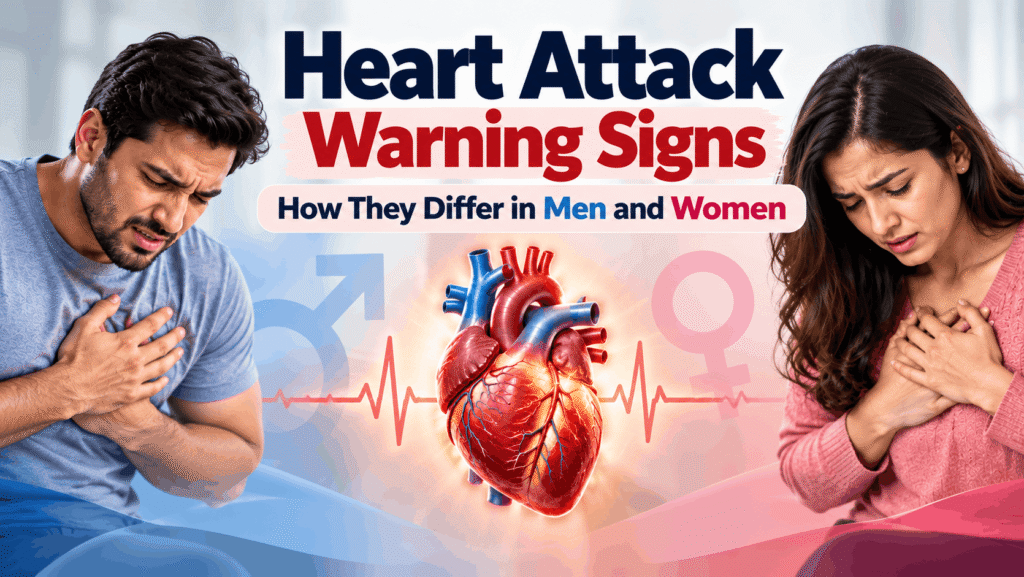
Quick Answer: The symptoms of a heart attack are similar for both men and women, but women are more likely to have atypical symptoms. This can include chest pressure or pain, shortness of breath, sweating, nausea, or pain spreading to the arm, back, neck, jaw, or shoulder. Women might also suffer from unusual fatigue, indigestion, dizziness, or shortness of breath even if there is no obvious chest pain.
Introduction
A heart attack does not always look like the dramatic scene we see in movies. While sudden, crushing chest pain is a well-known warning sign, some people experience much milder or less obvious symptoms. This can be particularly important for women, who may experience symptoms such as unusual tiredness, nausea, shortness of breath, or pain in the back, shoulder, arm, neck, or jaw.
Knowing the warning signs can make a real difference. A heart attack is a medical emergency, and getting treatment quickly can help limit damage to the heart. The symptoms can vary from person to person, so it is important not to dismiss something simply because it does not match the “classic” picture of a heart attack.
What Happens During a Heart Attack?
A heart attack, medically known as a myocardial infarction, occurs when blood flow to part of the heart muscle becomes severely reduced or blocked. Without enough oxygen-rich blood, the affected heart muscle can begin to become damaged.
The blockage usually results from a buildup of fatty deposits in the coronary arteries. If a plaque ruptures, a blood clot may form and further restrict blood flow. Since a heart attack requires immediate medical treatment, the longer the heart muscle goes without sufficient blood supply, the more severe the possible permanent damage becomes.
Why Heart Attack Symptoms Can Be Different in Women
Women can experience the same major warning signs as men, and chest pain or discomfort remains the most common heart attack symptom in women. However, women may also experience symptoms that are less commonly associated with a heart attack.
These symptoms can occur with chest discomfort or sometimes without obvious chest pain. This can make it easier to mistake a heart attack for indigestion, acid reflux, flu, stress, exhaustion, or another less serious problem.
The important message is not that women always have different symptoms. Rather, their symptoms can be broader and sometimes less obvious.
Heart Attack Symptoms Women Should Know
1. Chest pressure or discomfort
Chest discomfort is still one of the most important warning signs. It may feel like pressure, squeezing, fullness, tightness, aching, or discomfort in the center of the chest. It does not always have to be severe. The sensation may last several minutes, disappear, and then return. Because intensity can vary, mild chest discomfort shouldn’t automatically be dismissed.
2. Shortness of breath
Unusual shortness of breath may serve as a warning sign, whether or not there is chest discomfort. Some women may have trouble breathing when active, while others may feel breathless even at rest. If sudden or unexplained breathlessness occurs together with other possible heart attack symptoms, it should be treated as an emergency.
3. Unusual or extreme tiredness
Not every feeling of tiredness is a sign of heart trouble. Yet it is possible to experience unexplained or unusual fatigue during a heart attack, and this may happen more frequently in women. For instance, a person might suddenly feel extremely tired while doing an activity that usually doesn’t cause any problems. Take any persistent or unusual weakness seriously, especially if it’s accompanied by other symptoms.
4. Nausea, vomiting, or an upset stomach
Nausea and vomiting can easily be mistaken for a stomach problem. However, they can also occur during a heart attack.
A woman experiencing nausea together with chest discomfort, sweating, shortness of breath, dizziness, or pain in the back, jaw, or arm should not assume that it is simply indigestion.
5. Back, shoulder, neck, or jaw pain
Heart attack discomfort does not necessarily stay in the chest. It can spread to the back, shoulders, arms, neck, jaw, or upper abdomen.
Women may be more likely to experience discomfort in these less typical locations. Take sudden, unexplained pain or pressure in these areas seriously, especially if it’s accompanied by other symptoms.
6. Dizziness or lightheadedness
When having a heart attack, you may feel dizzy, faint, weak, or as if you are about to faint. This happens together with chest discomfort, trouble breathing, sweating, nausea.
7. Cold sweating
Breaking out in a cold sweat for no obvious reason can also be a warning sign. It may occur alongside chest discomfort, nausea, dizziness, or shortness of breath.
Again, the symptoms do not always arrive together. Some heart attacks begin gradually, and symptoms can come and go.
Heart Attack Symptoms in Men vs Women
The classic symptoms of a heart attack are common to both genders. Still, women are more likely to experience unusual tiredness, nausea, breathlessness, dizziness and discomfort in the back, shoulder, arms, neck or jaw.
| Symptom | Men | Women |
| Chest discomfort or pressure | Common | Common |
| Shortness of breath | Common | Common |
| Arm, shoulder or back discomfort | Possible | Possible and may be more prominent |
| Nausea or vomiting | Possible | More commonly reported |
| Unusual fatigue | Possible | More commonly reported |
| Dizziness or lightheadedness | Possible | Possible |
| Jaw, neck or upper-back discomfort | Possible | Possible |
| Indigestion or stomach discomfort | Possible | May occur and can be mistaken for a digestive problem |
This comparison should not be used as a checklist for deciding whether someone is having a heart attack. Symptoms overlap considerably between men and women, and either sex can have mild, unusual, or even silent symptoms.
Why Women May Mistake Heart Attack Symptoms for Something Else
One reason heart attacks can be missed is that some symptoms do not immediately seem heart-related. For example, nausea may feel like a stomach bug. Burning or discomfort in the upper abdomen may be mistaken for indigestion. Tiredness may be blamed on poor sleep or a busy day. Back or jaw discomfort may be attributed to muscle tension.
The American Heart Association cautions that women may overlook symptoms, mistaking them for acid reflux, the flu, or typical aging, which can lead to a delay in receiving treatment.
What to Do in the First 10 Minutes
1. Recognize that it could be an emergency
If you or someone around you develops symptoms that could indicate a heart attack, do not wait for the symptoms to become severe.
Warning signs include chest pressure, unexplained shortness of breath, sudden sweating, nausea, unusual weakness, or pain in the arm, back, neck, jaw, or upper abdomen.
You do not need to be certain that it is a heart attack before seeking help.
2. Call emergency medical services immediately
Call your local emergency number as soon as you suspect a heart attack.
In India, the national emergency number is 112. Calling emergency services allows trained personnel to begin assessment and treatment and arrange appropriate transport.
Do not wait to see whether the symptoms disappear.
3. Stop what you are doing and sit down
While waiting for help, stop physical activity and sit or rest in a comfortable position. Try to remain as calm as possible and avoid walking around unnecessarily.
If you are helping another person, stay with them and monitor their condition while you wait for emergency assistance.
4. Do not drive yourself if emergency transport is available
An ambulance is generally the safer option because emergency medical personnel can begin care while transporting the person to the hospital.
If an ambulance or emergency medical service is genuinely unavailable, another person should drive the person to the nearest appropriate hospital. Driving yourself should be a last resort.
5. Ask about aspirin rather than taking it automatically
Aspirin may be recommended for some adults with suspected heart attack, but it is not appropriate for everyone.
The American Heart Association’s first-aid guidance says an alert adult with non-traumatic chest pain may be encouraged to chew and swallow aspirin while waiting for emergency medical services, provided there is no known aspirin allergy or medical reason not to take it. If you are unsure, it is reasonable to wait for EMS guidance.
The safest practical approach is to call emergency services first and follow the instructions given by the emergency operator or healthcare professional. Do not delay the emergency call to look for aspirin.
6. If the person becomes unresponsive
If someone becomes unconscious and is not breathing normally, this may indicate cardiac arrest rather than simply a heart attack.
Call emergency services immediately and begin CPR if you can do so. If you are not trained in CPR, hands-only CPR may be performed by pushing hard and fast in the center of the chest while waiting for emergency assistance.
When Should You Seek Emergency Help?
- Do not wait for every possible symptom to appear. A heart attack can begin with only one or two symptoms, and symptoms can be mild or come and go.
- Seek emergency medical help for new or unexplained chest pressure or discomfort, especially when it is accompanied by shortness of breath, sweating, nausea, dizziness, or pain in the arm, back, neck, jaw, shoulder, or upper abdomen.
- Even if you are unsure whether a heart attack is causing the symptoms, it is better to get assessed promptly.
Can Heart Attack Symptoms Start Slowly?
Yes. A heart attack does not always begin with sudden, intense pain.
Some people develop mild symptoms that gradually become more noticeable. Symptoms may also come and go over several hours. Some people may even experience warning symptoms before the actual heart attack.
This is one reason it is important not to ignore new or unexplained symptoms simply because they are mild.
Risk Factors Women Should Be Aware Of
Heart attack risk is influenced by several factors. High blood pressure, high cholesterol, high blood sugar or diabetes, smoking, obesity, physical inactivity, and other health conditions can increase cardiovascular risk.
Women can also have risk factors and circumstances that require specific attention, including pregnancy-related complications such as preeclampsia. Certain less common causes of heart attack, such as spontaneous coronary artery dissection (SCAD), are also particularly relevant to women.
Understanding your individual risk factors can help you and your healthcare professional decide which preventive steps and screenings are appropriate.
How Can Women Reduce Their Heart Attack Risk?
Heart health builds over time rather than being protected by a single lifestyle change.
Modifications to lifestyle which have been found to be beneficial in the prevention of cardiovascular disease include eating a healthy diet, exercising regularly, not smoking, maintaining a healthy body weight if necessary, managing high blood pressure and diabetes, and seeking appropriate treatment.
Regular healthcare visits also help check blood pressure, cholesterol, blood glucose, and other factors that may affect heart health.
If you already have a heart condition or other cardiovascular risk factors, discuss an appropriate prevention plan with your healthcare professional.
Frequently Asked Questions
1. What are the most common heart attack symptoms in women?
Chest pain or discomfort is still the most common symptom. Women may also have shortness of breath, unusual fatigue, nausea or vomiting, dizziness, sweating, and pain or discomfort in the back, shoulder, arm, neck, or jaw. These symptoms may occur either with or without chest pain.
2. Can a woman have a heart attack without chest pain?
Yes. Although chest discomfort is common, some women may experience symptoms such as nausea, shortness of breath, unusual tiredness, dizziness, or pain in the back, shoulder, arm, neck, or jaw without obvious chest pain.
3. How long can heart attack symptoms last?
Symptoms vary. They may begin suddenly or develop gradually, and they can sometimes come and go. Do not wait for symptoms to last a certain amount of time before seeking help. New or unexplained symptoms that could indicate a heart attack require urgent medical assessment.
4. Should I take aspirin if I think I am having a heart attack?
Call emergency medical services first. Aspirin may be appropriate for some adults, but it is not safe for everyone. Emergency personnel may advise you to chew aspirin if appropriate, taking allergies and other medical considerations into account. Never delay the emergency call while deciding whether to take aspirin.
5. Can indigestion or nausea actually be a heart attack symptom?
Yes, it is possible to experience nausea, vomiting, indigestion, or discomfort in the upper abdomen during a heart attack, especially in women.
Conclusion
Heart attacks don’t always make themselves known by having severe chest pain. In particular, women may experience important warning signs such as unusual fatigue, nausea, shortness of breath, dizziness, or discomfort in the back or jaw. If these symptoms are recognised and emergency medical services are contacted immediately, this can help secure quicker treatment since every minute counts.
References
- https://www.heart.org/en/health-topics/heart-attack/warning-signs-of-a-heart-attack/heart-attack-symptoms-in-women
- https://www.nhlbi.nih.gov/health/heart-attack/symptoms
- https://www.nhlbi.nih.gov/health/heart-attack/women
- https://www.heart.org/en/health-topics/heart-attack/warning-signs-of-a-heart-attack
- https://cpr.heart.org/en/resuscitation-science/2024-first-aid-guidelines
- https://www.mayoclinic.org/first-aid/first-aid-heart-attack/basics/art-20056679
- https://www.mayoclinic.org/diseases-conditions/heart-attack/in-depth/heart-attack-symptoms/art-20047744