Introduction
Minerals are frequently overshadowed by vitamins and proteins in the world of nutrition. But these little yet mighty nutrients are crucial to the overall health and well-being. The variety of body processes that minerals are involved in is enormous- strengthening teeth and bones, helping in nerve activity, muscle contraction, and hormone synthesis. Minerals are needed in smaller quantities as opposed to macronutrients like carbohydrates, proteins, and fats. This does not, however, make them any less important. Any minor deficiency may affect the normal functioning of the body and cause chronic health issues. Minerals cannot be produced by the human body; therefore, they need to be sourced through a balanced diet. This blog will equip you with a better understanding of the necessary minerals, their types, uses, sources, and how to make sure that you are getting the necessary amount of them in daily life.
What Are Minerals?
Minerals are inorganic components that are formed on Earth and taken by plants via the soil and water. These minerals are directly derived by animals (including human beings) and indirectly through animal products in plant-based foods. They also play an essential role in different physiological functions such as enzyme roles, fluid balance, and cellular activities.
Minerals are divided into two broad categories depending on the quantity the body requires:
Types of Minerals
1. Macro minerals (Major Minerals)
Relatively larger quantities (over 100 mg/day) of the following minerals are needed:
- Calcium
- Phosphorus
- Magnesium
- Sodium
- Potassium
- Chloride
- Sulfur
These minerals are essential in supporting the structural integrity (including bones), and body controls like nerve conduction and muscle contraction.
2. Trace Minerals (Microminerals)
Very little is needed of these, but they are equally important:
- Iron
- Zinc
- Copper
- Iodine
- Selenium
- Fluoride
- Manganese
Although trace minerals are required in small amounts, they are vital to body functions such as oxygen delivery, the immune system, and antioxidation.
Important Minerals and their uses:
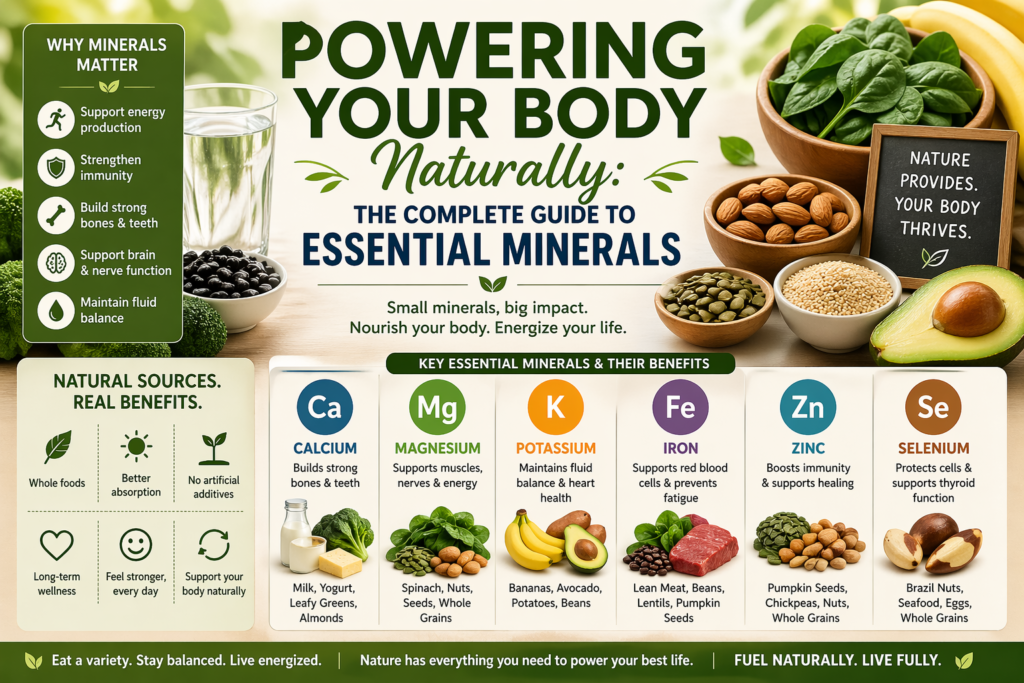
Calcium
The most common mineral in the human body is calcium. It is stored in bones and teeth (approximately 99 percent) and is used to give structural strength.
Functions:
- Builds and maintains strong bones and teeth
- Assists with clotting the blood.
- Helps in muscle contraction and nerve conduction.
Sources: Dairy products, greens, tofu, almonds.
Iron
Iron is also important in the manufacture of hemoglobin, which is a protein of the red blood cells that transports oxygen around the body.
Functions:
- Prevents anemia
- Supports energy production
- Enhances cognitive function
Sources: Red meat, spinach, lentils, beans, fortified cereals.
Magnesium
The body has a total of over 300 biochemical reactions that involve magnesium.
Functions:
- Helps in muscle and nerve performance.
- Controls blood sugar.
- Assists in protein synthesis.
Sources: Nuts, seeds, whole grains, green vegetables.
Potassium
Potassium is an electrolyte that aids in fluid balance and heart health.
Functions:
- Regulates blood pressure
- Maintains fluid balance
- Assists in good muscle performance.
Sources: Bananas, potatoes, oranges, and coconut water
Zinc
Zinc plays a vital role in the immune system and the healing of wounds.
Functions:
- Boosts the immune system
- Helps grow and develop.
- Helps in the synthesis of DNA.
Sources: Shellfish, meat, legumes, seeds.
Iodine
Thyroid hormones are essential to metabolism and are made with the help of iodine.
Functions:
- Supports thyroid function
- Regulates metabolic rate
Sources: Seafood, iodized salt, dairy products.
Selenium
Selenium is an effective antioxidant that helps to prevent cell damage.
Functions:
- Supports immune function
- Defends against oxidative stress.
- Controls thyroid hormones.
Sources: Brazil nuts, fish, eggs
Use of Minerals in the Body.
Minerals are essential for the proper functioning of the body. The significance of them can be summed up as follows:
Structural Support: Calcium and phosphorus give strength to bones and teeth.
Oxygen Transport: Iron makes sure that oxygen is transported efficiently to every part of the body.
- Electrolyte Balance: Sodium and potassium control fluid balance and nerve impulses.
- Immune Function: Zinc and selenium increase the body’s defense system.
- Hormonal Balance: Iodine plays a vital role in the production of thyroid hormones.
In the absence of enough mineral uptake, these processes may be compromised, causing health issues.
Signs and Symptoms of Mineral Deficiency
The deficiency of the minerals may be gradual and may not be noticed at once. The symptoms may include some of the following:
- Fatigue, weakness
- Muscle cramps or spasms.
- Bones that are brittle and easily broken.
- Poor concentration and memory
- Loss of hair and low immunity.
- Irregular heartbeat
To illustrate, anemia may be caused by iron deficiency, whereas bones and osteoporosis may be weakened due to calcium deficiency.
How to guarantee Mineral Intake:
- Eat Well-balanced Diets.
Eat a balance of foods from all food groupings such as fruits, vegetables, whole grains, proteins, and dairy.
- Target Whole Foods.
The whole foods are naturally endowed with minerals as opposed to processed foods that can be deficient in essential nutrients.
- Stay Hydrated
Water has trace minerals and aids in the transportation and absorption of nutrients.
- Use Fortified Foods
Essential minerals such as iron and iodine are usually fortified into foods such as cereals and salt.
- Practice Smart Cooking
Vegetables should not be overcooked because this can cause some of the minerals to be lost.
Mineral Absorption and Interactions
Mineral absorption is influenced by several factors:
Enhancers: Vitamin C enhances iron.
Inhibitors: Calcium can bind to iron.
Phytates: Are present in grains and legumes, and have the potential to inhibit absorption of minerals unless processed properly (soaking/sprouting).
The knowledge of these interactions will make the most out of the consumed minerals.
Should We Take Mineral Supplements?
Although mineral intake is preferably done through natural food sources, in some instances, supplements might be necessary:
- During pregnancy
- In people with food limitations
- When there are identified deficiencies.
Nonetheless, too much consumption of supplements may be detrimental. For instance:
- Excess of iron may result in toxicity.
- A large amount of calcium can cause kidney stones.
As such, supplements are to be taken under the direction of a doctor.
Conclusion
Minerals are vital nutrients that are fundamental in keeping the body healthy and engaging in crucial body processes. Although needed in low quantities, they have great effects on the body. The most effective method of making sure of sufficient mineral intake is through a well-balanced diet that is rich in whole foods. With a more knowledgeable diet and a better comprehension of the mechanisms of minerals in the body, you will have made a significant move towards long-term health and well-being.
Frequently Asked Questions (FAQs)
- What are the uses of minerals to the body?
Minerals aid in the essential functions of bone, transport of oxygen, nerve signaling, and immune defense.
- Will I be able to obtain sufficient minerals with a vegetarian diet?
Indeed, plant-based foods such as legumes, nuts, seeds, and leafy greens are sources of numerous essential minerals.
- Which is the most prevalent mineral deficiency?
One of the most common is iron deficiency, particularly in women.
- Are cooking techniques associated with differences in mineral content?
Yes, excessive cooking may diminish mineral content, in particular, in vegetables.
- Can mineral supplements be taken on a daily basis?
Only if prescribed. Overdose may result in poisoning and health complications.
- What mineral is significant to immunity?
Zinc is significant in enhancing the immune system.
- What can I do to increase the absorption of minerals?
Iron pairs with vitamin C; do not consume too much tea/coffee after eating, and have a balanced diet.
References
- World Health Organization (WHO) – Nutrition
https://www.who.int/health-topics/nutrition - National Institutes of Health (NIH) – Office of Dietary Supplements
https://ods.od.nih.gov - Harvard T.H. Chan School of Public Health
https://www.hsph.harvard.edu/nutritionsource - Food and Agriculture Organization (FAO)
https://www.fao.org - Mayo Clinic – Vitamins and Minerals
https://www.mayoclinic.org
Reviewed by : Nitin Sharma