


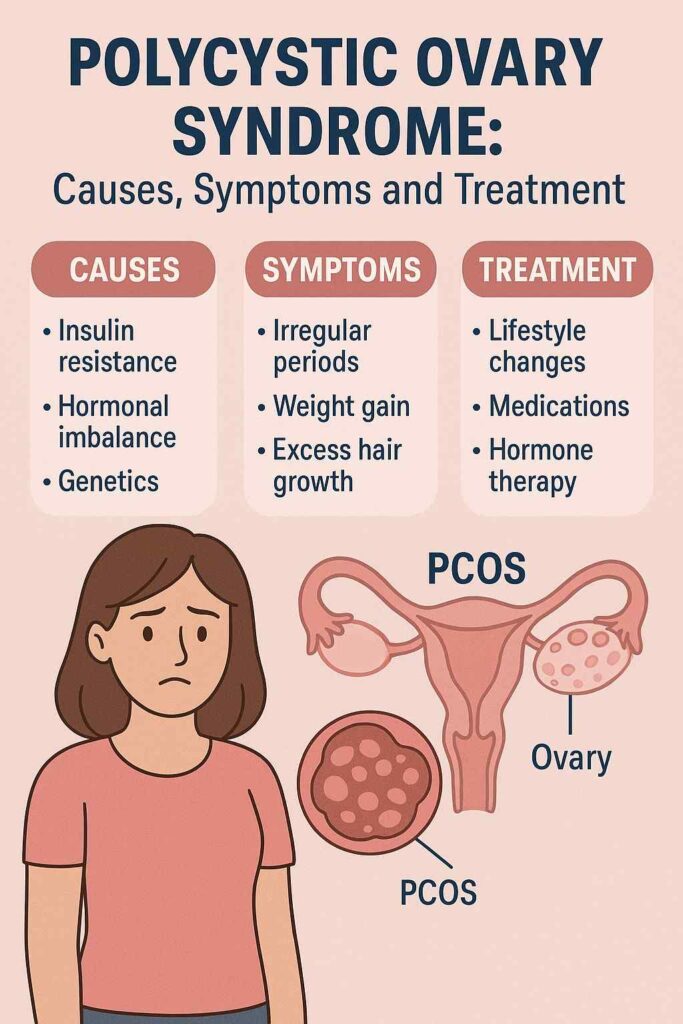
Polycystic Ovary Syndrome (PCOS) is a common condition among women of reproductive age. It affects nearly one in ten women worldwide, but many go undiagnosed for years. PCOS is a complex condition that affects not only a woman’s reproductive health but also her metabolism, mental health, and long-term well-being
This article explains what PCOS is, its causes, symptoms, diagnosis, treatment options, diet, lifestyle tips, and ways to prevent complications, helping women make informed health decisions.
What is PCOS?
Polycystic ovarian syndrome (PCOS) is a condition caused by hormonal changes, occurring when ovaries (reproductive organs in females that produce eggs) release excess levels of hormones called androgens (male hormones), creating an imbalance that disrupts the menstrual cycle, affecting regular ovulation.
How does PCOS affect women?
Women diagnosed with this condition may have
- Missed or irregular cycles
- Polycystic ovaries (enlarged ovaries with multiple small follicles, frequently visible on an ultrasound)
- Acne, hair loss, and facial hair may all result from elevated androgen levels.
Key note: PCOS is linked to a variety of lifestyle-related conditions, including insulin resistance, obesity, type 2 diabetes, infertility, and heart disease.
Types of PCOS
Depending upon the lifestyle and environmental factors, PCOS can be classified into 4 types, such as
1. Insulin-Resistant PCOS
This is the most common type of PCOS. It occurs when the body develops insulin resistance due to factors such as smoking, excessive sugar intake, pollution, and trans fats. High insulin levels interfere with ovulation and cause the ovaries to produce too much testosterone.
2. Pill-Induced PCOS
May occur due to long-term use of birth control pills that suppress ovulation. Many women experience normal ovulation after stopping medication. However, in some cases, ovulation may not occur for months or even years. However, this is a controversial issue that is frequently regarded as a temporary hormonal disruption rather than true PCOS.
3. Inflammatory PCOS
This type occurs when chronic inflammation interferes with ovulation, causing hormonal imbalance and excess androgen production. Stress, environmental toxins, food sensitivities, and gluten intolerance are all possible triggers of inflammation.
Symptoms include frequent headaches, skin allergies, infections, vitamin D deficiency, abnormal blood counts, and thyroid irregularities.
4. Secondary PCOS
Hidden PCOS is frequently caused by underlying conditions and typically resolves within 3-4 months of treating the underlying cause. Thyroid disease, iodine deficiency (particularly in vegetarian women), zinc deficiency, and the use of artificial sweeteners may all play a role.
What are the polycystic ovarian syndrome symptoms?
PCOS symptoms vary from woman to woman, depending on their lifestyle and health status. The most common signs include:
- Irregular periods: Often associated with missed periods and irregular cycles, which can include heavy periods and bleeding.
- Excess hair growth (hirsutism): Often linked with PCOS, heavy hair growth can be observed in the arms, chest, face, and abdomen, affecting about 5-10% of women during reproductive age.
- Acne and oily skin: Because of high androgen levels, acne can appear on your face and last throughout puberty, making it difficult to treat.
- Weight gain and obesity: PCOS affects approximately 50% of overweight women, particularly women, making weight management difficult.
- Dark patches around skin: you may have darkening of skin, especially in the region around the armpit, neck, and groin (between the legs). This condition is also known as acanthosis nigricans.
- Infertility: PCOS may cause infertility in females due to irregular ovulation, which can make a female unable to have children.
- Thinning of hair: Females with abnormal androgen levels may lose their hair or have male pattern baldness.
What causes PCOS?
While there is no exact cause of PCOS known, it can be due to several factors that can contribute to the increased risk of PCOS, including:
- Hormonal Imbalance: The ovaries may produce an excess of androgen, which can interfere with ovulation, resulting in missed and late periods, as well as infertility, leading to PCOS.
- Insulin resistance: The pancreas releases insulin, which helps regulate blood sugar levels. When cells become insulin resistant, more insulin accumulates, which can result in the release of a male hormone known as androgen, causing disrupted ovulation and other conditions such as diabetes.
- Genetics: Several studies have found that having a family history of PCOS raises the risk of developing the condition in future generations. This means that if your mother or sister has it, you are at a higher risk.
- Chronic low-grade inflammation: Women with polycystic ovarian syndrome may have increased levels of inflammatory markers even in the absence of any injury; this may indicate the PCOS condition.
How to Diagnose Polycystic Ovarian Syndrome?
As there is no specific testing to diagnose PCOS, your doctor may perform several exams, such as A pelvic exam, check for any mass, growth, or other changes in your reproductive organs. Depending on your symptoms, a biochemical or hormone assay can be done, and glucose tolerance tests (to measure body response to sugar), and triglyceride and cholesterol tests (to check for good and bad cholesterol) are recommended.
- Imaging test: Ultrasound pelvis is used to detect polycystic ovaries (multiple cysts in the ovaries) by examining the size and bulkiness of the ovaries, which can confirm polycystic ovarian syndrome. In the event that the ultrasound results are unclear, an MRI pelvis may be recommended.
Note: Diagnosis requires clinical correlation; ask your doctor about the condition after diagnosis to better understand it.
How to treat polycystic ovarian syndrome?
There is no permanent treatment for PCOS, and it can be controlled by managing lifestyle habits, certain medications, and supportive therapies.
Lifestyle tips
- Try to maintain your weight through regular exercise. Even a 5-10% loss in body weight improves symptoms.
- Follow a balanced diet, and control sugar intake as even small amounts of sugar can add up and worsen insulin resistance.
- Regular exercise increases insulin sensitivity and hormonal balance.
- Avoid smoking and drinking, and get enough sleep.
- Manage your stress through yoga, meditation, and proper sleep to reduce symptoms.
- Magnesium supplements, which are known to have anti-inflammatory properties, can also be beneficial. It helps to gradually improve symptoms.
Fertility Treatment
- Gonadotropin Injection: Mimics natural hormones like follicle-stimulating hormone and luteinizing hormone. These are given to stimulate egg production in women.
- In vitro fertilization: If medications remain ineffective, the woman’s partner’s sperm is artificially fertilized under lab conditions and transferred into the uterus.
Note: Consult with your doctor before taking any medications or following any treatment.
Healthy diet for PCOS
- Instead of refined carbs, opt for low-GI options like whole grains, quinoa, oats, and sweet potatoes.
- Eating fiber-rich foods like vegetables, fruits, beans, and lentils can help regulate blood sugar and improve digestion.
- To maintain stable blood sugar levels, combine protein, healthy fats, and complex carbohydrates.
- Reduce your intake of sugary drinks, fruit juices, and processed foods that cause insulin spikes.
- Drink at least 2-3 liters of water per day to aid metabolism and hormone balance.
- Nuts, seeds, avocado, olive oil, and fatty fish are all good sources of healthy fats.
- Avoid packaged snacks, fried foods, and fast food.
- Eat small, balanced meals throughout the day instead of large, heavy meals.
- Meal planning allows you to avoid eating junk food when you’re hungry.
- Eat slowly, stay focused, and listen to your body’s hunger cues.
Complications with PCOS
Untreated PCOS can lead to conditions like the following:
- Infertility.
- Type 2 diabetes
- High blood pressure and heart disease
- Endometrial cancer –
- Depression and anxiety
- Obesity.
Conclusion
PCOS, or polycystic ovarian syndrome, is a complicated disorder that affects metabolism, mental health, and reproductive health. Although there is no known cure, women can manage their PCOS by adopting a healthy lifestyle, eating a balanced diet, exercising frequently, managing their stress, and seeking medical attention when necessary.
The likelihood of preventing long-term issues like diabetes, heart disease, and infertility increases with the early diagnosis of PCOS. If women with PCOS are aware of their condition and consistently manage it, they can lead healthy, balanced, and satisfying lives.
FAQs
Are ovarian cysts and PCOS the same thing?
Well, no. Not every woman with PCOS develops ovarian cysts, despite the name. PCOS is more than just the development of cysts; it is essentially a hormonal imbalance.
Is it possible to reverse PCOS naturally?
PCOS cannot be “cured,” but symptoms can be reduced by losing weight, eating healthier, exercising regularly, and managing stress. Improve your lifestyle, and you will surely get the results.
Can I get pregnant if I have PCOS?
Yes. Many women with PCOS can conceive naturally, but it may take longer. Additionally, treatments like IVF or medication can increase your chances.
At what age does PCOS usually begin?
PCOS typically begins in adolescence, following a girl’s first period, but it can develop later depending upon the lifestyle of the person PCOS can In case of any doubt must reach out doctor for further evaluations and tests.
What foods are good for PCOS?
Whole grains, lean meats, fresh fruits, vegetables, nuts, and seeds are all part of a PCOS-friendly diet. These foods boost insulin sensitivity and help in hormone balance, and help control the symptoms of PCOS you can also follow a PCOS diet plan based on doctor advice.
Can I eat sugar if I have PCOS?
Refined sugar, sweets, and sugary beverages should be as thy may increase your blood sugar levels which may worsen PCOS in case if you lke sweet, choose natural fruit sugars and a little honey or jaggery instead.