


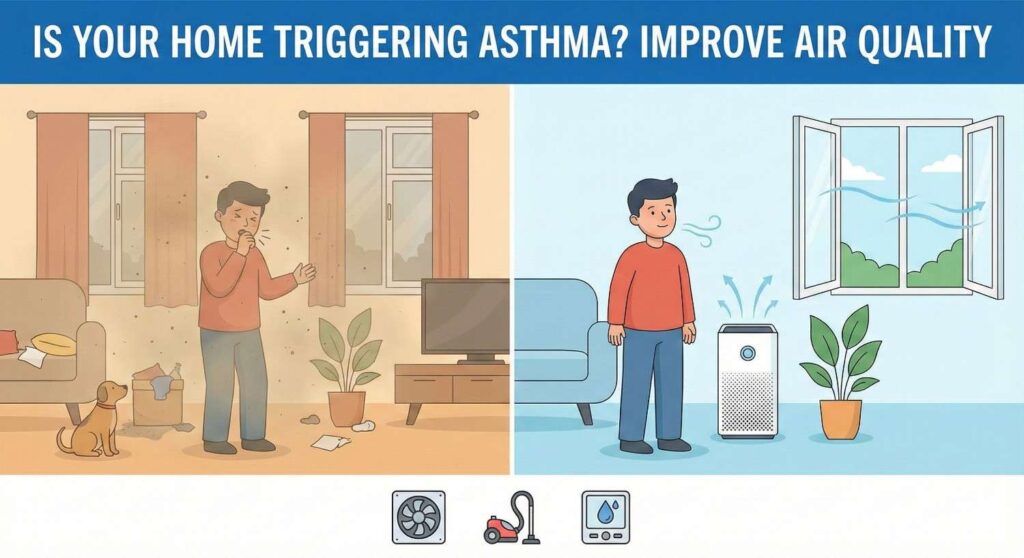
Introduction
When you suffer from asthma, you may consider outdoor pollution, the air quality index, seasonal pollen, or smog as the primary culprits. But do you know the air inside your home may be the reason for serious respiratory disorders, including asthma, as air inside your home can be 4-5 times polluted than outside air
Indoor air quality plays a major role in managing asthma and its symptoms, and poor indoor air quality can be challenging. Since we spend 90% of our time in our homes, invisible pollutants like dust mites, mould spores, pet dander, and cleaning chemicals can quietly worsen symptoms. Breathing these airborne contaminants can harm our lungs and give rise to coughing, wheezing, or shortness of breath, as well as several other respiratory disorders.
This article will help you understand how poor air quality can affect asthma and the associated triggers that may worsen symptoms, as well as simple practices and tips on how to breathe easily to keep yourself safe and healthy.
A connecting link between Indoor Quality and Asthma
Asthma is a chronic inflammatory condition causing narrowing of the lungs’ airways with symptoms such as wheezing, cough, and shortness of breath. When a person inhales these allergens, pollutants, or irritants, they can trigger these symptoms; they can cause airway inflammation and constriction, leading to asthma attacks.
As stated by the World Health Organization (WHO), poor indoor air quality contributes to millions of asthma cases each year, particularly in children. Volatile organic compounds (VOCs), tobacco smoke, mould, and pet allergens are triggers that may worsen symptoms even at low levels of exposure.
Why is indoor air poorer than outdoor air?
While some people think that closing windows and doors can avoid pollutants and allergens coming from outside to your home, today’s modern houses are made energy efficient means they lack mechanical ventilation that does not allow adequate air flow, resulting in pollutants trapped inside your house that recirculate and make indoor air quality bad.
According to the U.S. Environmental Protection Agency (EPA), a study found that indoor air can be 2–5 times more polluting than outdoor air. Poor ventilation, synthetic materials, and household products are often the contributors. read here-( Indoor Air Quality | US EPA)
What are the common Asthma triggers in your Home?
Below are some of the main asthma triggers that can give rise to the symptoms right under your nose
-
Dust mites
These are microscopic arachnids that feed on dead skin flakes and thrive in warm, humid environments such as bedding, upholstered furniture, and carpets. Usually, their droppings trigger Asthma and allergic rhinitis.
How to reduce their exposure
- Use dust mite-proof covers for mattresses and pillows.
- Wash mattresses weekly in hot water (above 60°C).
- Try to maintain humidity below 50%.
- Reduce fabric surfaces—choose wood or vinyl flooring over carpets.
-
Mould and Mildew
These are the fungi that release tiny spores into the air and may trigger asthma attacks, found in damp places like bathrooms, basements, and kitchens, especially when the ventilation is poor with high humidity.
Signs to identify mould problems
- Musty odor
- Discoloured walls or ceilings
- Long-lasting dampness
Prevention tips
- Fix leaks immediately.
- For ventilation, use exhaust fans in bathrooms and kitchens.
- Use a dehumidifier to keep moisture levels below 50%
- Clean visible mould with vinegar or mild bleach solutions (wear a mask while cleaning).
-
Pet dander and roaches
If you have a pet in your house, their dander (tiny skin flakes), along with saliva, feces, and shedding body parts from cockroaches, can act as a potent trigger for asthma symptoms. Sometimes, pet hair can also trap dust and pollen that may further increase the risk.
- Keep pets out of bedrooms and upholstered furniture.
- Bathe and brush your pet regularly.
- Use disinfectant or insect repellent to keep them away from your house
- Use air filters or purifiers to capture airborne dander.
-
Volatile organic compounds or chemical fumes
VOCs are the gaseous compounds that are released from paints, cleaning sprays, air fresheners, and even new furniture. For asthmatic patients, these chemicals irritate the lining of the lung and may trigger asthma attacks, leading to long-term sensitivity.
How to reduce VOC exposure
- Go for low-VOC paints and products.
- Choose natural, unscented cleaners.
- Keeping your home well-ventilated after painting or remodeling.
-
Tobacco smoke and Fumes
A person who smokes in your house generates secondhand smoke. It is considered one of the most dangerous indoor pollutants, and if a person is cooking, it also generates fumes from frying oil and fine particulate matter that can irritate your lungs.
Prevention tips
- Don’t allow anyone to smoke in your home.
- Keep your kitchen fully ventilated, and use chimneys to avoid pollutant accumulation.
- You may use an induction or an electric cooker if required.
-
Pollen and Outdoor Pollutants
Pollen dust may enter your home through windows or attach to your clothes when you come from outside, which may trigger and cause pollen allergy in high-risk asthma patients.
- How to prevent Pollen dust exposure
- Keep your windows closed during high pollen seasons.
- Wash or change your clothes after the visit.
Solutions for Cleaner Air: How to Test and Improve Indoor Air Quality
There are several ways through which the air quality within your home can be improved. Here are some of the practical ways to do so:
1.Control moisture and ventilation.
An adequate balance of both humidity and ventilation is essential, as asthma thrives in extremes; too dry or too humid air can both be problematic.
- Humidity above 60% favours mould growth and dust mites.
- Humidity below 30% can dry out airways and worsen irritation.
It is important to keep the humidity level between 30% and 50%. You can use a hygrometer for monitoring it and a dehumidifier or humidifier to maintain balance.
Ventilation for asthma
- Open your windows and doors for a shorter period of time for a proper airflow.
- Use an exhaust fan in the bathroom and kitchen to avoid excess humidity.
2.Air Purifiers
Use a High-efficiency particulate air (HEPA) filter if you have a person with asthma in your home. HEPA air filters can filter out 99.97% of airborne particles as small as 0.3 microns—perfect for dust, mould spores, and pet allergens.
Before buying, always look for
- A genuine HEPA filter
- CADR rating (Clean Air Delivery Rate) appropriate for your room size
- Activated carbon filter for VOCs and odour
3.Deep Cleaning of household products
To better manage an asthmatic condition, you can also follow these things in addition.
If possible, replace wall-to-wall carpeting with hard-surface flooring (wood, tile, linoleum)
Vacuum your carpets frequently with a HEPA-filtered vacuum cleaner.
Dust with a damp cloth to trap particles instead of simply stirring them into the air
Regularly clean curtains and upholstered furniture, which are magnets for dust mites and asthma triggers.
4.Chemical Swaps and Product Choices
You can switch to certified asthma- and allergy-friendly products. Make your own non-toxic cleaners using vinegar and baking soda, or avoid using synthetic air fresheners and scented candles. Use essential oil diffusers sparingly, as even natural oils can be irritants.
5. Air Quality Monitor
You can also include smart devices that measure indoor pollutants such as particulate matter (PM2.5), VOCs, CO₂, humidity, and temperature. You can connect them through an app with your phone to provide real-time data, handy for families managing asthma.
A key Takeaway to Improve your Indoor air Quality
- Keep the humidity between 40 and 50%.
- Vacuum regularly using a HEPA filter.
- Don’t smoke indoors.
- When cooking or taking a shower, use exhaust fans.
- Switch to low-VOC paints and cleaners.
- Maintain good ventilation all year.
- Replace air filters every two to three months.
Conclusion
Do not let your home be your enemy of health; by improving your indoor air quality, you can make your living space a safer and healthier environment, while it also helps you to manage asthma symptoms more effectively. Small, effective changes like using air purifiers, managing humidity, and reducing chemical use can have a significant impact on your respiratory health.
Take charge of your health and get started today. Transform your living space into the sanctuary of clean air your lungs deserve, as clean air isn’t a luxury; it’s a need for long-term asthma control with every breath you take at home should help you heal, not harm.
FAQ
What are the primary hidden triggers that worsen asthma in my home?
The main contributors are microscopic biological allergens such as dust mites (specifically their droppings), mould and mildew spores (which thrive in damp conditions), and pet dander. Keep an eye out for chemical irritants like VOCs (Volatile Organic Compounds) released by new furniture, paint, and cleaning supplies.
What is the ideal humidity level to control allergens?
Aim to keep your indoor humidity level between 30% and 50%. This range is crucial because it is low enough to prevent the growth of both mould and dust mites, which require relative humidity levels of $55\%$ or higher to thrive.
How can I improve my home’s air?
A high-quality air purifier is necessary. Select models with a True HEPA filter, which effectively captures 99.97% of the tiny particles that cause asthma attacks. Make sure the unit is appropriate for the room you use the most (usually the bedroom).
Does poor home ventilation make asthma worse?
Yes, Modern, energy-efficient homes often trap air. Poor ventilation allows pollutants from cooking, cleaning, and dampness to become highly concentrated indoors. Opening windows briefly and using kitchen/bathroom exhaust fans are the best ways to dilute these irritants.
Can everyday household products trigger my asthma?
Absolutely. Chemical gases (VOCs) are released by scented products such as air fresheners, candles, and many household cleaners. These gases irritate the airways and are a common, if often overlooked, cause of coughing and wheezing. Switch to certified fragrance-free products.