


Introduction
As winter fades away or weather patterns change, healthcare organizations worldwide brace themselves each year for a common hurdle: flu season. Though influenza research, vaccination efforts, and public education have been ongoing for decades, influenza remains an important cause of illness, hospitalization, and even deaths. However, one of the most significant challenges to effective prevention is not access, it’s misinformation.
Despite the many years the vaccine has been available and many myths about its safety, efficacy and immunity that have been debunked, many people remain hesitant to get the flu vaccine. In this blog we’ll address five of the most common myths surrounding the flu vaccine, and share what the science has to say, so you can make informed decisions about you and your loved ones.
For more information on the flu and its importance, read on…
Influenza (flu) is an infectious respiratory disease that is caused by flu viruses. It is easily spread by droplets produced during coughing, sneezing or talking by an infected person. Some people have only minor symptoms, while others — particularly young children, older adults, pregnant women and people with weak immune systems — may get more serious complications, such as pneumonia.
The flu can come on quickly and be severe: high fever, body aches, fatigue and difficulty breathing. Hence the importance of prevention: particularly vaccination.
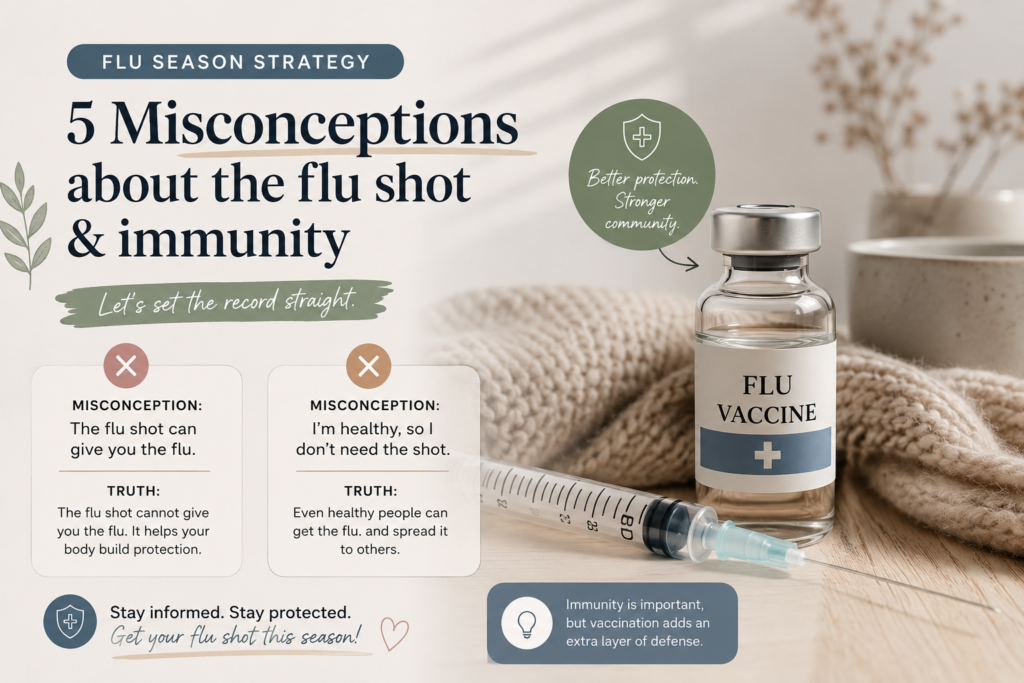
Myth 1: Getting the flu shot can give you the flu.
It is one of the most popular myths, and also one of the most easily disproved.
There are two types of flu vaccines, either :
- Inactivated (killed) virus, or Virus that is weakened so it doesn’t cause disease in healthy people.
- The flu vaccine that’s given by injection does not contain a live virus that can cause the flu. So biologically, it is impossible for the flu shot to give you the flu.
Why is it that some people get sick following vaccination?
A few people might have small side effects like:
- Low-grade fever
- Pain in the area where the injection was made.
- Fatigue
These symptoms are a tell-tale sign that your immune system is reacting and developing immunity. They are NOT the flu. The other option is timing: if you already had the virus prior to vaccination you could still get the disease.
Myth 2: Healthy People Don’t Need the Flu Vaccine
The common misconception is that flu vaccines are just for people who are elderly, or have chronic health conditions. Although these groups are indeed at higher risk, healthy people are a significant contributor to transmission.
Vaccination is important to everyone because:
- You can still get sick even if you’re healthy
- May transmit the virus to susceptible individuals without knowing.
- The flu virus is constantly changing, so last year’s flu vaccine doesn’t necessarily protect you from the flu this year.
Vaccination is not only for protecting individuals, but also about protecting the community (also called herd immunity). Once more individuals are vaccinated, the amount of individuals infected is drastically lowered.
Myth 3: The flu shot doesn’t work; why bother?
Yes, there are variations in the effectiveness of flu vaccines from one flu season to the next. This will depend on the match between the vaccine and the strains of viruses in circulation. This doesn’t mean the vaccine is ineffective, though.
The actual effect of the flu shot:
- Takes measures to avoid getting the flu
- Reduces the severity if infection occurs
- Reduces hospitalization and complications
- Helps protect high-risk populations
Vaccinated people may have less severe symptoms and recover more quickly in non-efficacious years.Consider the flu shot as a protective buffer that lowers the risk and impact of flu.
Myth 4: Natural Immunity is Better than Vaccine-Induced Immunity
Others say that being exposed to the flu makes you more immune than if you were shot with it. Natural infection will generate immunity but may involve serious risks.
The problem with natural immunity :
- You need to be ill, and even very sick to qualify for this.
- Increased likelihood of disease such as pneumonia or hospital stay
- Risk to others of infection spread
- Can potentially have long-term health effects in rare instances.
Vaccination, on the other hand:
- Protects your immune system from getting in trouble. Treats your immune system like a baby.
- Offers safeguarding without the risks of sickness
- Can be changed yearly to reflect new types of viruses
The flu virus can change often (antigenic drift), which may mean that immunity against a previous infection may not protect against new virus strains.
Myth 5: If I took my vaccination last year, I don’t need it again.
Influenza viruses are constantly changing. Scientists track circulating strains every year and revise the vaccine.
The importance of yearly vaccinations:
- Virus change: Each season new strains are formed.
- Low immunity: Immunity from the vaccine last year wanes over the course of time.
- New vaccine versions: vaccines are adapted for the most relevant strains
If you don’t get a flu vaccine every flu season, you’re at risk of getting a new variant.
The science behind getting a flu vaccine : The science of flu vaccination.
Once you get a flu shot, your immune system identifies parts of the virus (such as virus proteins) and starts making antibodies against them. The antibodies stay in your body and are able to mount a swift counterattack against the actual virus.
It’s a basic concept in immunology, called immune memory. Vaccines mimic infection without causing any disease; this helps the body get ready before encountering the disease.
Vaccinations are most important for certain people.
Flu vaccination is recommended for almost everyone over 6 months old, but is particularly important for people who:
- Healthcare workers
- Elderly individuals (65+)
- Pregnant women
- Children under 5
- Persons with chronic diseases (diabetes, asthma, cardiovascular diseases)
These groups are more prone to complications and so is prevention the more important factor.
Side effects vs. real risks
Mild and Temporary:
- Soreness
- Low fever
- Muscle aches
Extremely Rare:
Severe allergic reactions
Vaccination is the best prevention, but it is effective when combined with other prevention measures:
1.Practice Good Hygiene
- Wash hands regularly
- Use alcohol-based sanitizers
- Don’t touch your face with your hands
2.Boost Immunity – Getting your body stronger.
- Eat a balanced diet
- Get enough sleep
- Stay physically active
3.Stay home if you have symptoms
The problem with flu prevention is not science, it’s perception. In the digital age, misinformation is more contagious than viruses. In most cases, scientific information is overshadowed by social media content, anecdotes, and fear-based stories.
Education is an essential component to raising awareness:
- Effective communication from health care providers
- Evidence-based information campaigns
- Understand and respond to fear with sensitivity and truth
- But why is this so important these days?
A post-pandemic world means that people have gained more knowledge of infectious diseases and have become more vulnerable to misinformation. The lessons we have learnt from the global health crises underscore the need for vaccines, prevention at an early stage and confidence in science.
While the flu may not be as well-known as pandemics, it’s a consistent and significant public health issue.
Conclusion :
One of the easiest and most effective methods to protect yourself and others from the flu during the flu season is by getting a flu shot. Despite this, there are many who still don’t know how to do this due to the myths.
Frequently Asked Questions
- How long does it take the flu vaccine to work?
Your body needs time to build up enough antibodies to protect against influenza — typically 2 weeks after getting the vaccine.
- Is there a possibility of contracting the flu even if vaccinated?
Yes, that’s possible, but vaccination will lower the chances of having symptoms and make them more mild and brief.
- Is it safe for pregnant women to get the flu vaccine?
Flu vaccines are safe and recommended for pregnant women. They are protective to the mother as well as the baby (passive immunity).
- Should children get a flu vaccine each season?
Yes. Children should also be vaccinated each year, as flu viruses constantly change and immunity from past vaccines wanes over time.
- If I have a mild illness or a cold, can I still have the flu shot?
In most cases, yes. It is not contraindicated for mild illnesses such as a cold. If you’re ill or have a high fever, though, it’s best to see a health care professional.
- What’s the difference between the flu and a common cold?
Flu symptoms tend to be more severe and sudden with symptoms such as a high fever, body aches and a feeling of being unwell. A cold is less severe and tends to build up slowly.
- Does the Flu Vaccine interact with other vaccines?
Flu vaccines can be given safely with other vaccines. To keep children safe, health care providers may give multiple vaccines at one time if necessary.
- Why is it that flu vaccines need to be different each year?
Flu viruses can change very quickly. The strains circulating are reviewed by global health organization and the vaccine is updated each year in line with the most prevalent and virulent strains.
References
- WHO – Influenza (Seasonal)
- CDC – Seasonal Flu Vaccine Basics
- CDC – Who Needs a Flu Vaccine
- CDC – Influenza (Flu) Vaccine Safety
- CDC – Different Types of Flu Vaccines
- Health.com – Are Flu Shots ‘Live Virus’ Vaccines?
- Verywell Health – Understanding Flu Vaccine Effectiveness
Reviewed by : Nitin Sharma