


Introduction
Living with Chronic Obstructive Pulmonary Disease (COPD) can affect simple daily life activities like walking or climbing stairs. The good news is that incorporating the right exercises and healthy lifestyle habits can change the game and make life much easier.
Some consistency and a willingness to try, even without a gym membership, can greatly improve the quality of life in individuals living with COPD
This article discusses it all in plain English; from the best breathing techniques to the healthy foods that support your lungs, and everything in between. Let’s get started.
What Is Chronic Obstructive Pulmonary Disease (COPD)?
COPD is a long-term lung disease that makes it difficult to breathe due to airflow blockage and inflammation. About 300 million people are affected all over the world, and it is a major cause of disability. In most cases, COPD is caused by smoking, air pollution, and occupational dust.
Common Symptoms:
- Shortness of breath
- Chronic cough
- Wheezing
- Excess ucus
- Chest tightness
The importance of exercise in COPD
Exercise is one of the most effective ways to manage COPD. Certain types of exercise can help you use your lungs efficiently, reduce shortness of breath during activity, and calm down when you feel a flare coming on.
Benefits of Exercise:
- Strengthens breathing muscles
- Improves oxygen use
- Reduces breathlessness
- Boosts energy levels
- Enhances mental well-being
Even small amounts of regular activity can make a big difference.
Essential Exercises for COPD
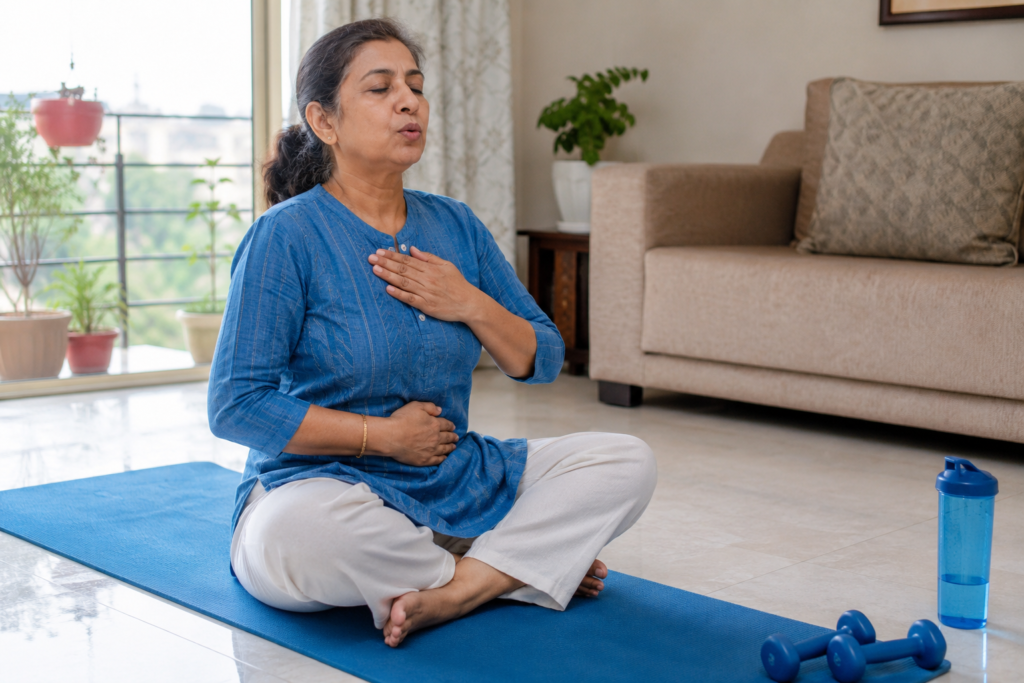
1. Breathing Exercises
Pursed-Lip Breathing
This simple breathing technique helps slow down breathing and keeps the airways open longer.
How to do it:
- Breathe in slowly through the nose
- Purse your lips like blowing out a candle
- Breathe out slowly
This is effective especially in periods of breathlessness.
Diaphragmatic Breathing
This is a slow and deep breathing that strengthens the diaphragm and fill the lungs with air.
How to do it:
- Place one hand on your chest and one on your abdomen
- Breathe deeply so your stomach rises more than your chest
2. Walking
Walking is a low-impact, easy, and safe exercise for COPD patients. It is good for the heart and lungs.
Tips:
- Start slow (5–10 minutes daily)
- Slowly increase the duration to about 60 minutes daily
- Use a comfortable pace
Why it helps: Improves endurance, heart-lung function, and helps COPD patients manage symptoms more effectively.
3. Strength Training
Strength training can help COPD patients by building stronger muscles, reducing and improving lung efficiency.
Examples:
- Light weights
- Resistance bands
- Chair squats
Tip: Start with low intensity and increase gradually.
4. Stretching Exercises
Stretching improves flexibility and reduces stiffness.
Examples:
- Arm raises
- Shoulder rolls
- Neck stretches
5. Pulmonary Rehabilitation Programs
These are structured programs supervised by healthcare professionals that help COPD patients become more active, strengthen muscles, reduce breathlessness, and improve overall health and quality of life.
Examples include:
- Exercise training
- Education
- Breathing techniques
👉 Learn more:
National Heart, Lung, and Blood Institute: https://www.nhlbi.nih.gov
Lifestyle Hacks for Managing COPD
1. Quit Smoking
Patients who are at risk of developing COPD can slow the disease’s course by quitting smoking; lifetime smokers have a much higher probability of developing COPD.
- Seek professional support
- Use nicotine replacement if needed
2. Maintain a Healthy Diet
Maintaining a healthy diet protects the lungs, while poor diets may increase the risk of respiratory disease.
Eat foods rich in:
- Fruits and vegetables
- Lean proteins
- Whole grains
Why it matters: A healthy diet directly influences important biological processes such as lung function, disease development, recovery, and long-term outcomes.
3. Stay Hydrated
Drinking enough water helps thin mucus, making it easier to cough and clear the airways.
4. Avoid Air Pollution
- Stay indoors during high pollution
- Use masks when necessary
- Keep indoor air clean
5. Manage Stress and Anxiety
Stress and anxiety can cause breathing difficulties cause anxiety and panic, which in turn tighten chest muscles and worsen symptoms.
Try:
- Meditation
- Gentle yoga
- Deep breathing
6. Sleep Well
Good quality is essential for managing COPD as it improves energy and breathing efficiency.
When Should You See a Doctor?
If you are a smoker or used to be a smoker, consult a doctor if you notice::
- Persistent coughing
- Wheezing
- Fever or chest pain
- Frequent flare-ups
Early treatment can prevent complications.
Conclusion
COPD can be managed by incorporating simple exercises and making healthy choices. Through this, you can take charge of your breathing and feel more confident without giving up your quality of life.
Consistency is key; even small steps can lead to meaningful improvements.
Frequently Asked Questions (FAQs)
1. Can exercise really help COPD?
Yes. Regular exercise improves lung efficiency and reduces breathlessness.
2. What is the best exercise for COPD?
Breathing exercises like pursed-lip breathing are highly effective.
3. Is it safe to exercise with COPD?
Yes, but always consult a healthcare provider before starting.
4. Can COPD be reversed?
No, but symptoms can be managed effectively.
5. How often should I exercise?
Aim for at least 3–5 times per week, depending on your ability.
Written by Girlie Tambirai Mapere
Reviewed by Nitin Sharma
References
- Spruit MA, Singh SJ, Garvey C, et al. An official ATS/ERS statement on pulmonary rehabilitation. Am J Respir Crit Care Med. 2013 (still widely cited post-2015).
DOI: https://doi.org/10.1164/rccm.201309-1634ST - Rochester CL, Vogiatzis I, Holland AE, et al. Pulmonary rehabilitation for respiratory diseases. Lancet Respir Med. 2015.
DOI: https://doi.org/10.1016/S2213-2600(15)00242-9 - McCarthy B, Casey D, Devane D, et al. Pulmonary rehabilitation for COPD. Cochrane Database. 2015.
DOI: https://doi.org/10.1002/14651858.CD003793.pub3 - Global Initiative for Chronic Obstructive Lung Disease (GOLD). Global strategy for COPD. 2024.
- Miravitlles M, Ribera A. Understanding COPD burden. Respiratory Research. 2017.
DOI: https://doi.org/10.1186/s12931-017-0546-2