


Table of Contents
- Introduction: What Are Blood Disorders?
- What Is Blood Made Of? (Understanding the Basics)
- Major Types of Blood Disorders
- Red Blood Cell Disorders
- White Blood Cell Disorders
- Platelet Disorders
- Bleeding and Clotting Disorders
- Common Symptoms of Blood Disorders
- What Causes Blood Disorders?
- How Are Blood Disorders Diagnosed?
- Treatment Options and Management
- Can Blood Disorders Be Prevented?
- Living with a Blood Disorder
- When Should You See a Doctor?
- Frequently Asked Questions (FAQs)
Introduction: What Are Blood Disorders?
Did you know that blood is an important fluid that carries oxygen around the body, fights infections and helps to stop bleeding during an injury?
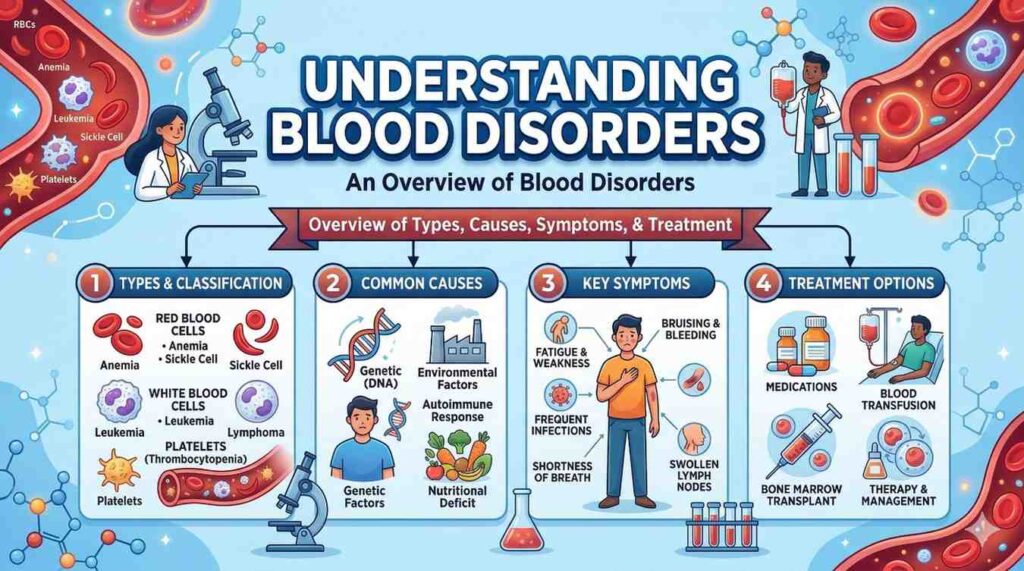
This blog discusses what blood disorders are, the different types, their causes and symptoms. It also explains how doctors diagnose these conditions and the treatment options available.
Blood is a fluid responsible for transporting oxygen, nutrients and metabolic waste products around the body. Blood disorders are conditions that affect the components of blood, including red blood cells, white blood cells, platelets and plasma.
What Is Blood Made Of? (Understanding the Basics)
Blood is made up of about 55% plasma and 45% blood cells. Plasma is a slightly yellow liquid composed of about 90% water.
Components of Blood
- Plasma: Contains water, proteins, electrolytes, nutrients, and vitamins.
- Red Blood Cells: Contain hemoglobin which transports oxygen from lungs to tissues.
- White Blood Cells: Part of the immune system and protect the body against infections.
- Platelets: Small blood components that help stop bleeding by forming clots.
Major Types of Blood Disorders
Red Blood Cell Disorders
In healthy individuals, red blood cells have a biconcave shape that allows them to pass easily through narrow capillaries. Certain diseases alter this shape and reduce oxygen transport.
- Anemia: Caused by nutritional deficiencies, genetic conditions, or chronic diseases.
- Sickle Cell Disease: A genetic condition where red blood cells become sickle-shaped and rigid.
White Blood Cell Disorders
- Leukemia: A blood cancer involving abnormal production of white blood cells.
- Lymphoma: A cancer affecting the lymphatic system.
Platelet Disorders
- Thrombocytopenia: A condition where platelet count is too low, causing excessive bleeding.
Bleeding and Clotting Disorders
- Hemophilia: A hereditary disorder where blood does not clot properly.
- Deep Vein Thrombosis (DVT): A blood clot that forms in deep veins, usually in the legs.
Common Symptoms of Blood Disorders
- Red Blood Cell Disorders: Fatigue, dizziness, pale skin, shortness of breath.
- White Blood Cell Disorders: Frequent infections, fever, swollen lymph nodes.
- Platelet Disorders: Easy bruising, nosebleeds, prolonged bleeding.
- General Symptoms: Bone pain, joint pain, unexplained weight loss.
What Causes Blood Disorders?
- Genetic conditions (e.g., sickle cell disease)
- Nutritional deficiencies (iron, vitamin B12, folate)
- Cancer
- Certain medications
- Autoimmune diseases
How Are Blood Disorders Diagnosed?
Doctors usually start with medical history and physical examination if symptoms such as fatigue, bleeding or bruising are present.
- Complete Blood Count (CBC): Measures RBCs, WBCs, hemoglobin and platelets.
- Peripheral Blood Smear: Microscopic analysis of blood cells.
- Bone Marrow Examination: Helps detect leukemia and other marrow disorders.
- Additional Tests: Coagulation studies and molecular tests.
Treatment Options and Management
- Iron or folate supplements
- Treatment of underlying diseases
- Medications such as hydroxyurea
- Blood transfusions
- Bone marrow transplant
Can Blood Disorders Be Prevented?
Some blood disorders are inherited and cannot be prevented. However lifestyle changes can help reduce risk.
- Healthy lifestyle
- Balanced diet rich in iron
- Genetic counselling
- Avoid smoking
- Regular health checkups
Living with a Blood Disorder
With proper treatment and support, people with blood disorders can lead healthy lives. Early diagnosis, continuous care, and emotional support improve quality of life.
When Should You See a Doctor?
You should consult a doctor if you experience persistent fatigue, unexplained bruising, frequent infections, prolonged bleeding, or pale skin.
Frequently Asked Questions (FAQs)
1. What is the most common blood disorder?
Anemia is the most common blood disorder worldwide.
2. Can blood disorders be passed through families?
Yes, some conditions like sickle cell disease and hemophilia are inherited.
3. Is there a cure for blood disorders?
Some blood disorders can be cured while others require long-term management.
4. How do I know if I have a blood disorder?
Symptoms such as fatigue, bruising, and frequent infections may indicate a blood disorder.
5. Can blood disorders spread like COVID-19?
No, blood disorders are not contagious.
Written by: Girlie Tambirai Mapere
Reviewed by: Nitin Sharma