


Introduction
Over 1.28 billion adults suffer from Hypertension, or as it is commonly known, high blood pressure. With symptoms that can go undetected for decades, this ‘silent killer’ damages blood vessels, raises the risk of stroke, heart attack, and kidney disease. While your genetics and lifestyle choices are major players, diet is the game-changer when it comes to beating this disease.
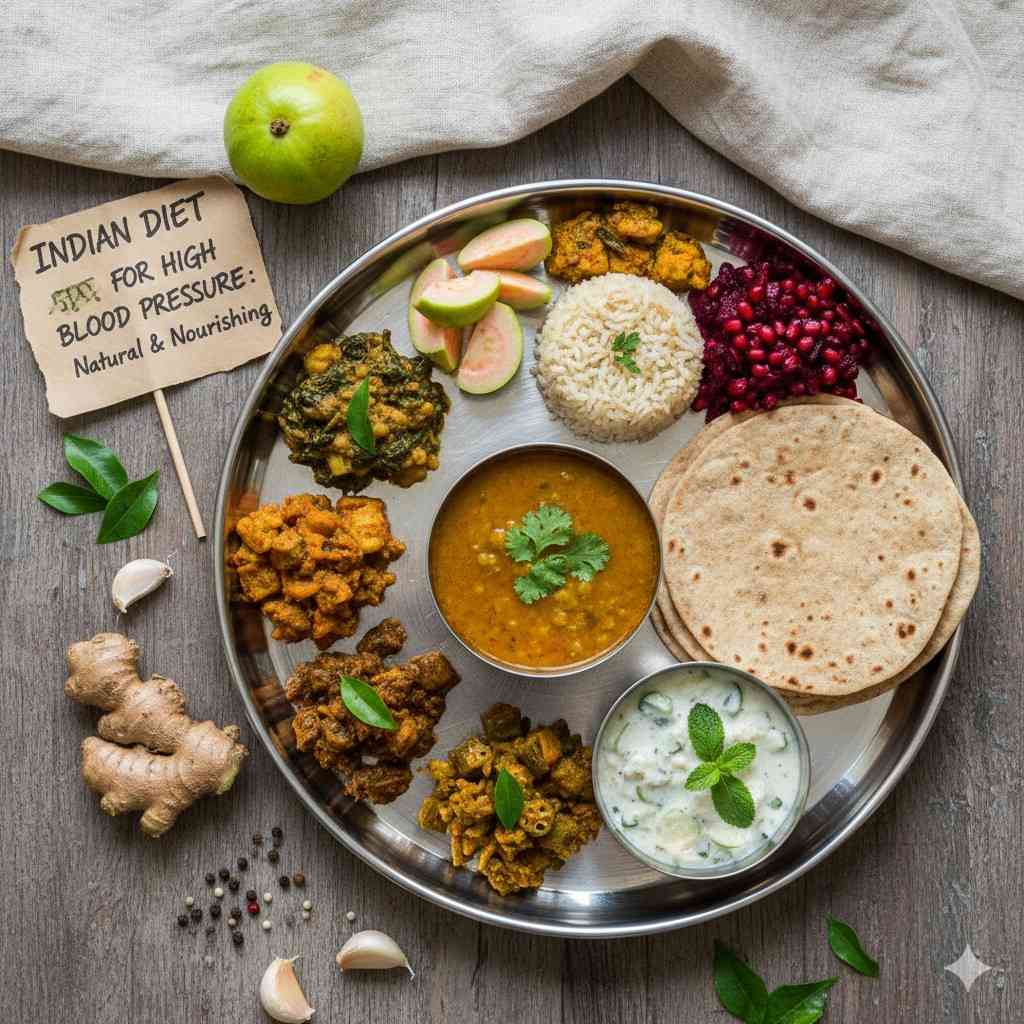
Doctors recommend the DASH diet: Food items rich in potassium and magnesium and low in salt, sugars, and saturated fats. This includes fruits and vegetables, lean proteins, and whole grains. If you think this means a life of bland, boring meals, you couldn’t be more wrong! The Indian diet, rooted in plant-based meals full of various spices, follows the DASH principles – helping regulate blood pressure, improve circulation, and boost energy, all while keeping your meals colorful, flavorful, and wholesome.
Understanding High Blood Pressure & Diet Connection
Even though it is a leading cause of early death, globally, only 40% of affected individuals are aware of it. Just as the inner walls of a pipe wear out when subjected to prolonged high-pressure water flow, the walls of your heart and blood vessels are also prone to wearing out when made to bear high pressure for too long. A healthy blood pressure reading is below 120/80 mmHg; anything above this puts extra strain on the heart and damages blood vessels over time.
Too much salt (over 5g a day) makes your body retain water and therefore raises pressure. But nutrients like potassium, magnesium, fibre, and antioxidants can undo this damage by flushing out salt, relaxing vessels, and maintaining active blood flow. That’s why an Indian-style DASH diet—packed with grains, lentils, spices, fruits, and vegetables – works as a simple and effective way to manage blood pressure.
Indian Foods That Help Manage High BP
- Fruits & Vegetables Rich in Potassium & Fiber
- Bananas: They provide 400-450 mg of potassium along with fibre, antioxidants, and magnesium, helping the body flush out sodium, relax blood vessels, balance cholesterol, and support healthy circulation.
- Papaya, guava, spinach, beetroot, amaranth, bottle gourd, and cucumbers: These are excellent sources of potassium and fibre, which enable sodium excretion, hydration, and vascular health. Additionally, dietary nitrates in spinach and beetroots convert to nitric oxide (NO) in the body, helping relax and dilate blood vessels.
- Whole Grains & Pulses
- Brown rice, oats, whole wheat, millets (ragi, jowar, bajra): Rich in dietary fibres and micronutrients, which improve blood vessel health and insulin sensitivity
- Lentils (dal), kidney beans (rajma), chickpeas (chana): Full of potassium, magnesium, protein, fibre, and resistant starches, they produce SCFA, thus promoting gut health, improving endothelial function, and regulating blood pressure.
fibre,
- Heart-Healthy Fats & Oils
- Mustard oil, groundnut oil, sunflower oil (in moderation): Rich in monounsaturated fats, these support cardiovascular health when used in moderation, offering a heart-friendly alternative to saturated fats.
- Nuts & seeds (flaxseed, almonds, walnuts): Abundant in magnesium, omega‑3 fatty acids, fibre, and antioxidants, these nuts and seeds help reduce inflammation, improve arterial function, and support blood vessel relaxation.
4.Protein Sources
- Low-fat paneer and curd: Full of calcium, potassium, and probiotics to improve nutrient absorption
- Fish: Rich in omega-3 fatty acids, they can improve endothelial function, reduce inflammation, and help relax blood vessels
- Spices & Herbs that Support BP Control: Garlic, turmeric, cinnamon, and methi (fenugreek) are rich in bioactive compounds that boost nitric oxide, improve blood vessel health, reduce inflammation, and serve as flavourful alternatives to excess salt
Indian Foods to Avoid or Limit
- High-salt pickles: food like papad, packaged chips, salted namkeens, fast food, fried snacks, samosa, pakora (trans fats) Full of salt (sodium), the Economic Times reported that urban Indians consume around 9.2 grams of salt per day, and the value is 5.6 grams for rural Indians, both above the WHO’s 5-gram recommended limit.
- Excess tea/coffee: Caffeine from tea or coffee is known to elevate BP. But the short-term spikes can turn into long-term hypertension with excessive consumption.
- Red meat and processed meat: High sodium, preservatives like nitrites, and gut microbiota-derived metabolites like trimethylamine oxide all contribute to endothelial dysfunction, vascular inflammation, atherosclerosis, and hypertension.
Sample Indian DASH Diet Plan for High BP
- Morning: Warm water with flaxseed or soaked almonds.
- Breakfast: Oats or vegetables and upma or poha with sprouts.
- Mid-morning: Fresh fruit (banana, apples, guava).
- Lunch: Whole wheat multigrain roti or brown rice with dal (moong or masoor), mixed vegetables (spinach, bottle gourds, carrots), and salad (cucumber, tomato, lettuce) with low-fat curd or buttermilk
- Evening snack: Roasted chana or fruit chaat, or green tea.
- Dinner: Vegetable khichdi with curd or millet roti with sabzi with curds
- Before bed: Warm turmeric milk (low-fat).
Conclusion
Managing blood pressure doesn’t require drastic dietary changes- just consistent, mindful habits. By embracing wholesome, local Indian foods and limiting processed alternatives, you can give your body long-lasting protection, nourishment , and most importantly, build a strong foundation for a healthier and more energetic life.
FAQs
Q1. Can I eat rice if I have high blood pressure?
Yes, but opt for brown rice or small portions of white rice paired with plenty of vegetables and pulses.
Q2. Can I eat salt if I have high blood pressure?
Salt is essential but should be restricted to under 5 g/day (about 1 teaspoon). Replace excess salt with herbs, spices, lemon, or rock salt in moderation.
Q3. What oils are best for cooking?
Use heart-healthy oils such as mustard oil, groundnut oil, rice bran oil, or olive oil—always in limited amounts.
Q4. Can I drink tea or coffee during high BP?
Limit to 1–2 cups a day. Prefer green tea or herbal teas without added sugar, and avoid strong coffee.
Q5Can i eat non-veg food with high BP?
Yes, choose lean protein like skinless chicken or fish, but avoid red meat and deep-fried preparations.
References:
- https://pmc.ncbi.nlm.nih.gov/articles/PMC10267604/
- https://www.ckbhospital.com/blogs/high-blood-pressure-diet-chart
- https://roshnisanghvi.com/blogs/plant-based-life/indian-diet-high-blood-pressure#tocs8
- https://www.mayoclinic.org/healthy-lifestyle/nutrition-and-healthy-eating/in-depth/dash-diet/art-20048456